
Battery R&D Equipment
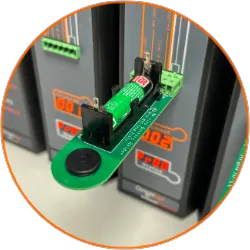
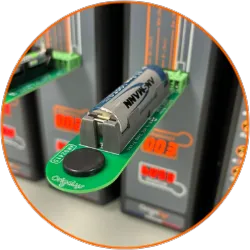
Battery Holder for cylindrical cell AA (LR06)
Price: 75 EUR
Price: On Request
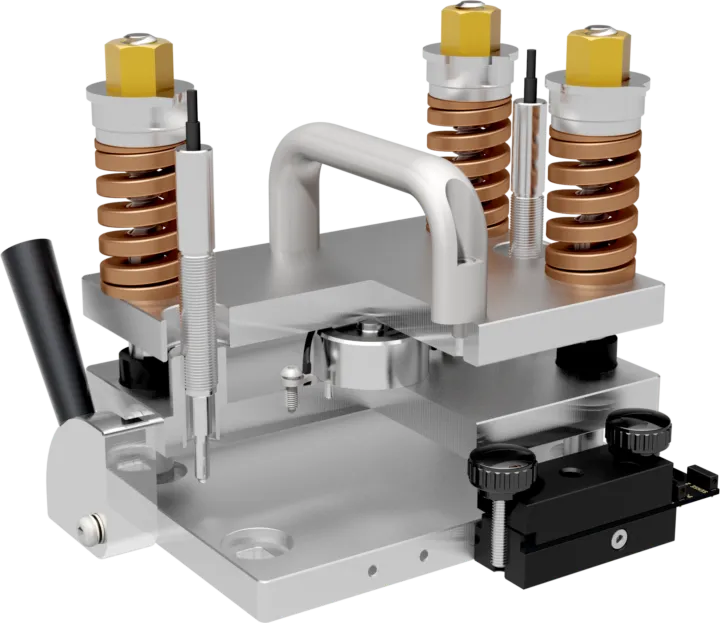
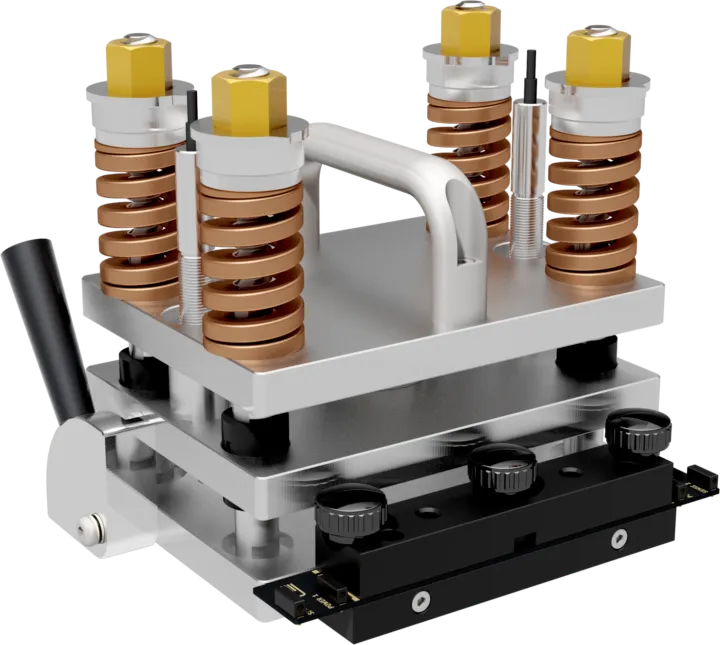
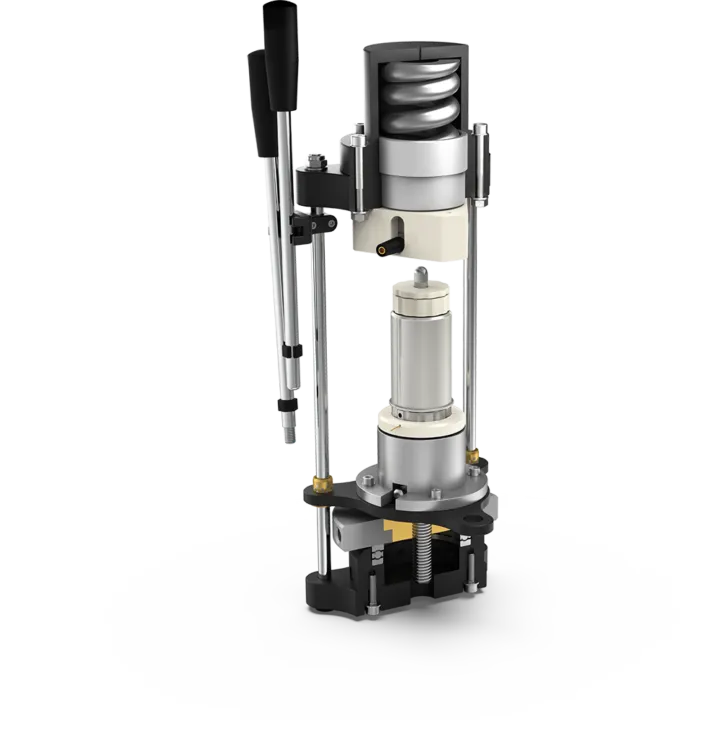
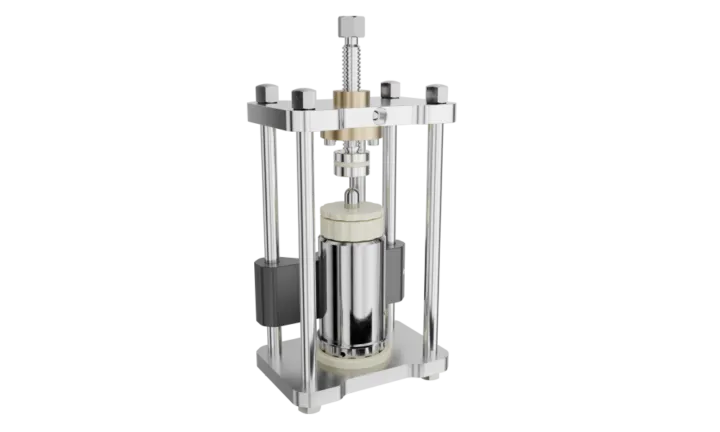
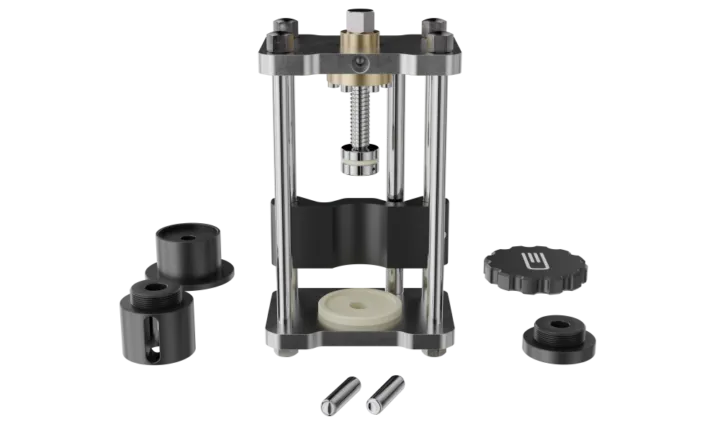
The ComprePouch can be used to operate your pouch cells under different conditions regarding the applied pressure and temperature. The applied pressure can be monitored and recorded. At the same time, you can follow thickness changes of your pouch cell, either induced by charging and discharging the battery and/or by applying pressure.
Typical applications
Understanding the mechanical behaviour of battery cells during cycling is a critical factor. If mechanical characteristics are not taken into account, battery research can end up with irreproducible results and, even worse, with issues when trying to transfer the obtained results to the module and pack level. Typical applications with the advanced pouch cell testing fixture ComprePouch are:
Applications
Pouch cell testing
Storage conditions
RH 0–80% (non-condensing)
Dimensions
18.9 x 14.6 x 17.3 cm (fixture), 14 cm x 10.6 cm x 6 cm (electronics)
Operating temperature
−30 to +90 °C (fixture), −20 to +85 °C (LVDT), +10 to +40 °C (electronics), The ComprePouch can be used inside of an oven/climate chamber to adjust the temperature
Product type (battery)
Pouch cell fixture
Max Battery Thickness
20 mm
Max. Applicable force
25 kN
Max. Applied voltage
Get pricing and product details from rhd instruments.
40 V (AC/DC)
Compression architecture
Spring-loaded (pseudo-constant pressure), Pseudo-constant volume
Max. Measurement current
5 A (integrated tab connection)
In-situ thickness monitoring
LVDT thickness (optional)
Force monitoring
Force display and/or PC logging
Pressure mapping
Optional, required tools available via TekScan Inc.
Max. Sample dimensions
120 mm x 110 mm x 20 mm
Spring packages
Soft (Purple) – Max 3.3 kN (4 springs), Medium (Red) – Max 16.6 kN (4 springs), Hard (Bronze) – Max 25.0 kN (4 springs, frame limit)
Spring rates
Soft: 32.3 N/mm, Medium: 272.0 N/mm, Hard: 1,150 N/mm
Form factor compatibility
Pouch
Electrode configuration
2-electrode
0 global ratings
Verified Identity
Every review undergoes an email verification process to ensure it originates from a verified industry professional.
Verified Purchase
We manually validate "Verified Purchase" claims by cross-referencing with supplier records or identifying the equipment in peer-reviewed scientific publications.
Transparent Publishing
All verified reviews, whether positive or negative, are published without bias as long as they comply with our community guidelines.
No reviews yet. Be the first to share your thoughts!
Share your experience with this product.
Help the scientific community by sharing research papers that utilize this equipment.
Contact us to add your research.
Price: 75 EUR

Price on request

Price: On request

Price on request

Price on request
Price: 75 EUR
Price on request
Price on request
Price on request
Price: 40 EUR