
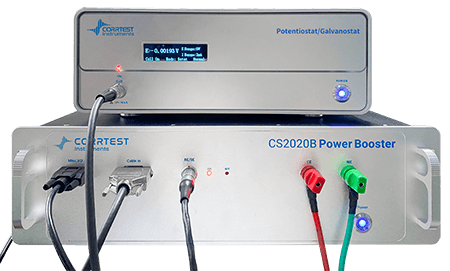
High-Power EIS systems
CS350M + Booster Potentiostat/Galvanostat
Price on request
Get pricing and product details from Admiral Instruments.
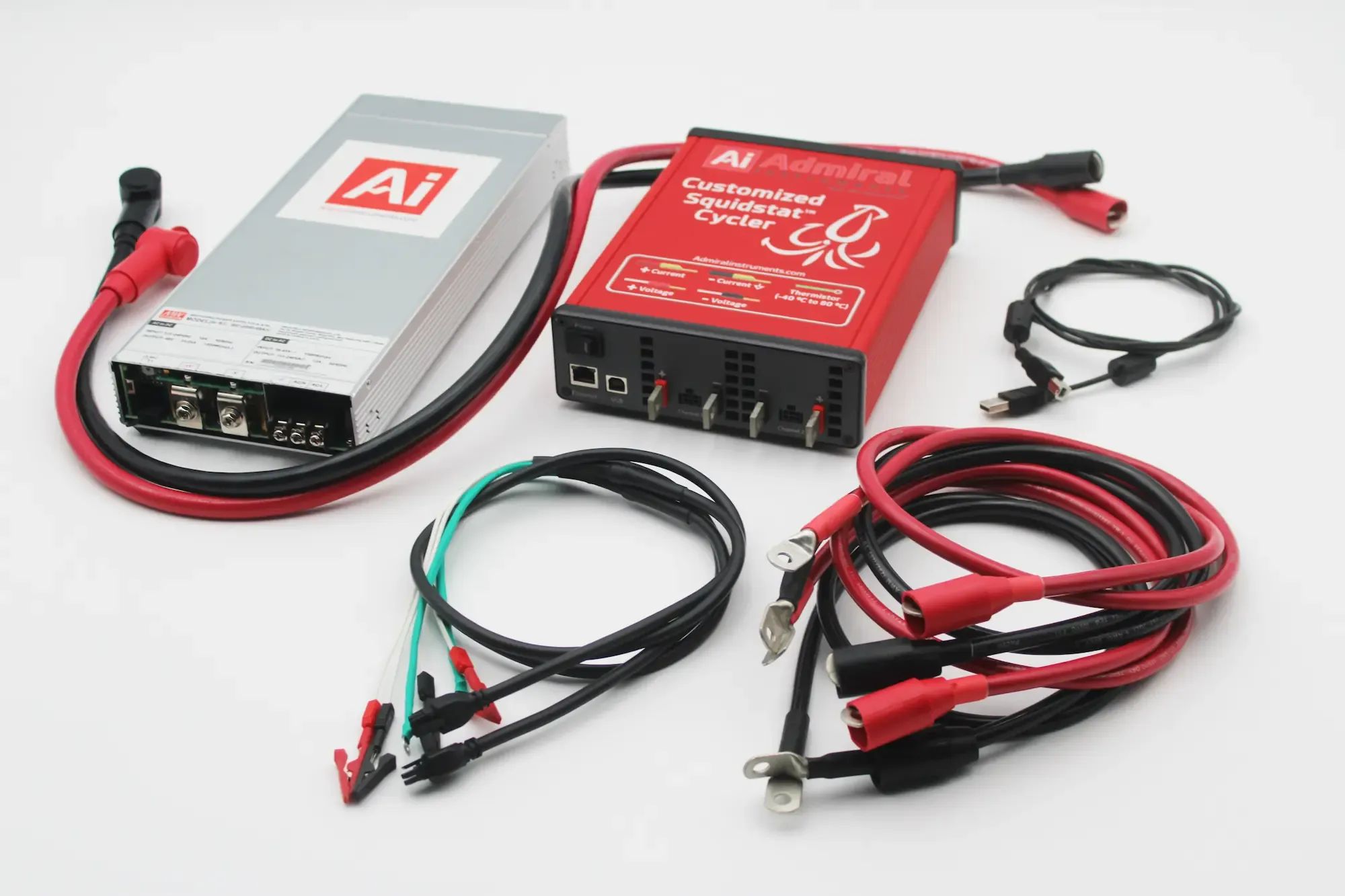
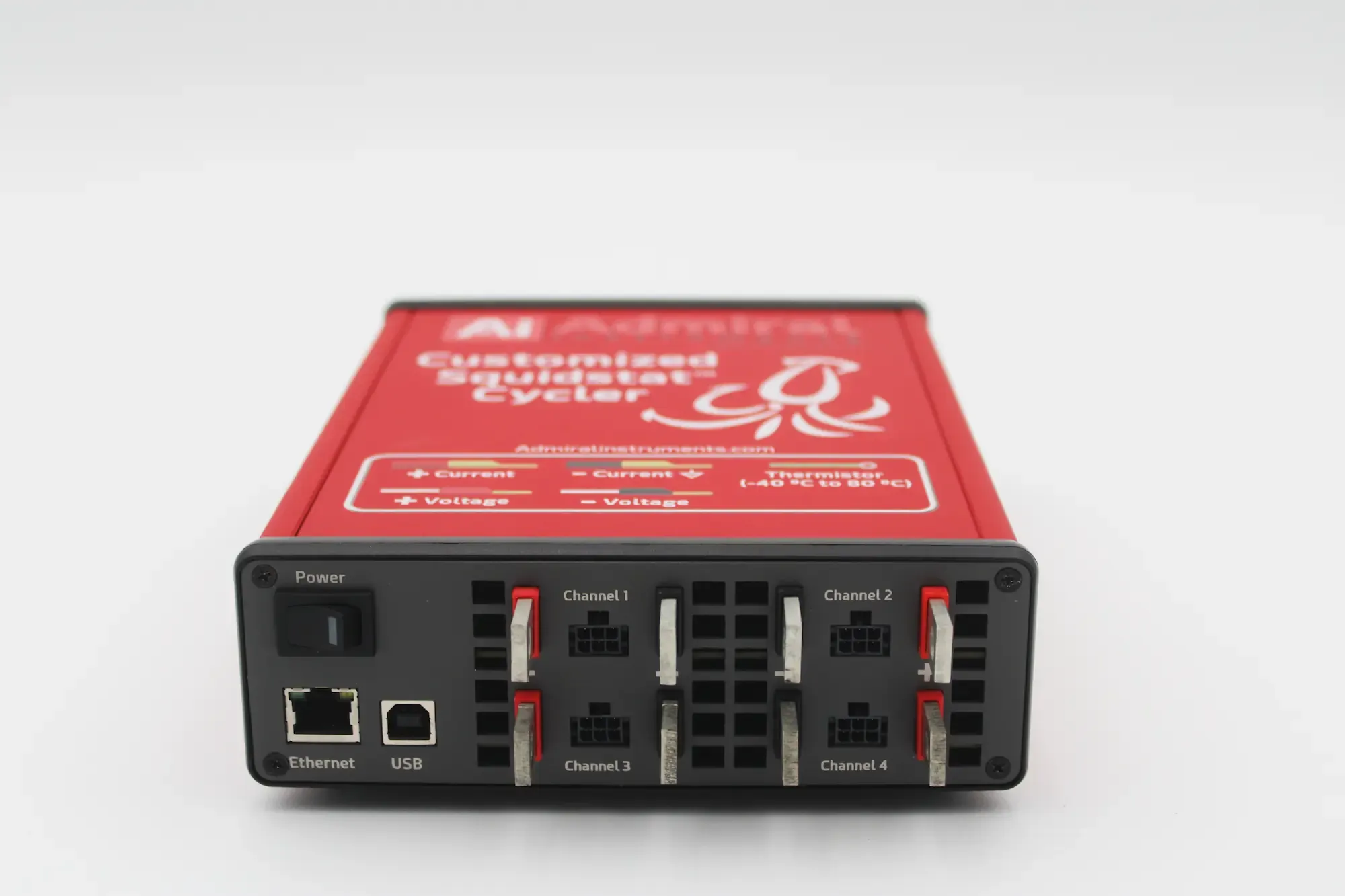
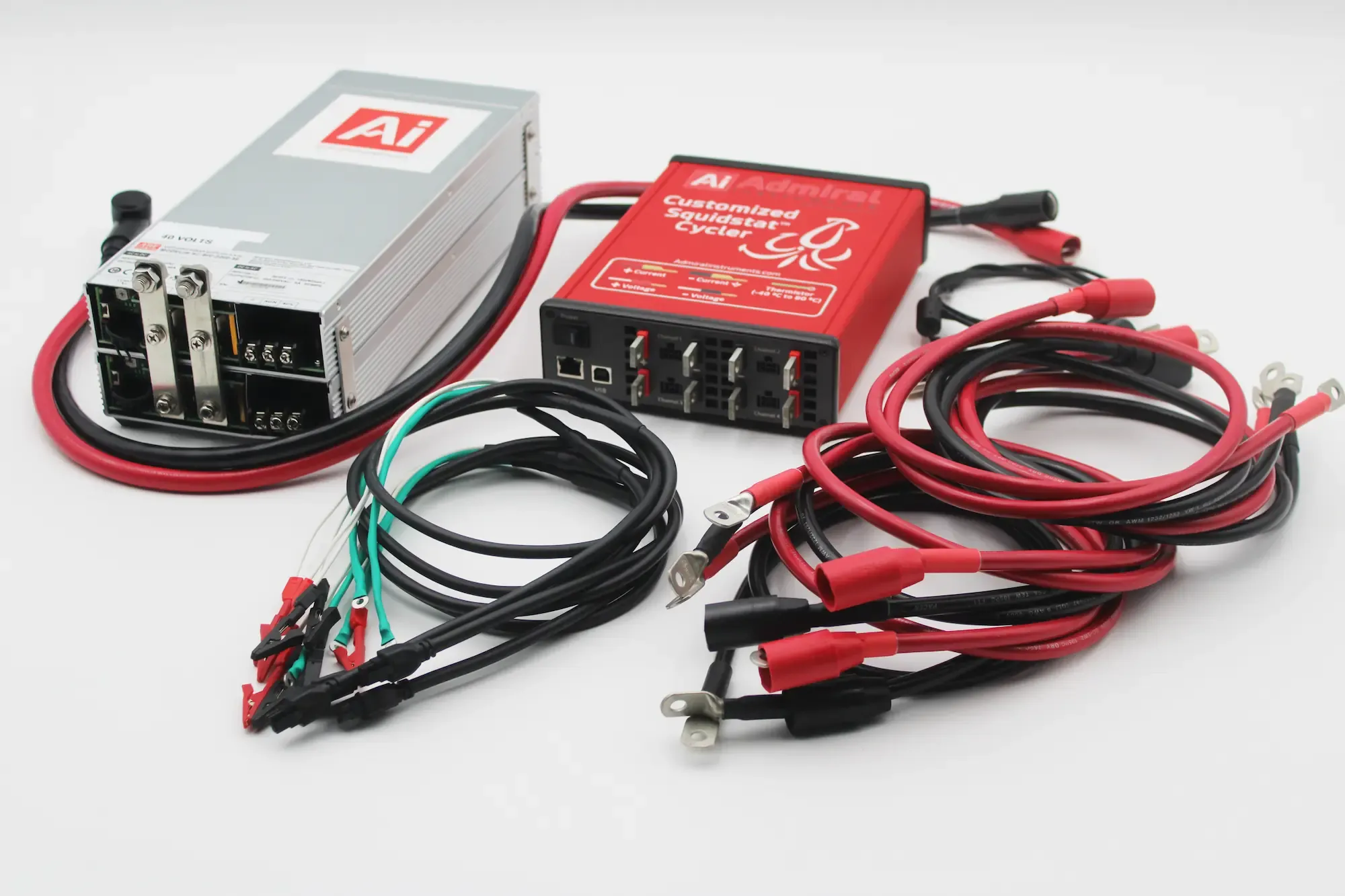
Price: On Request
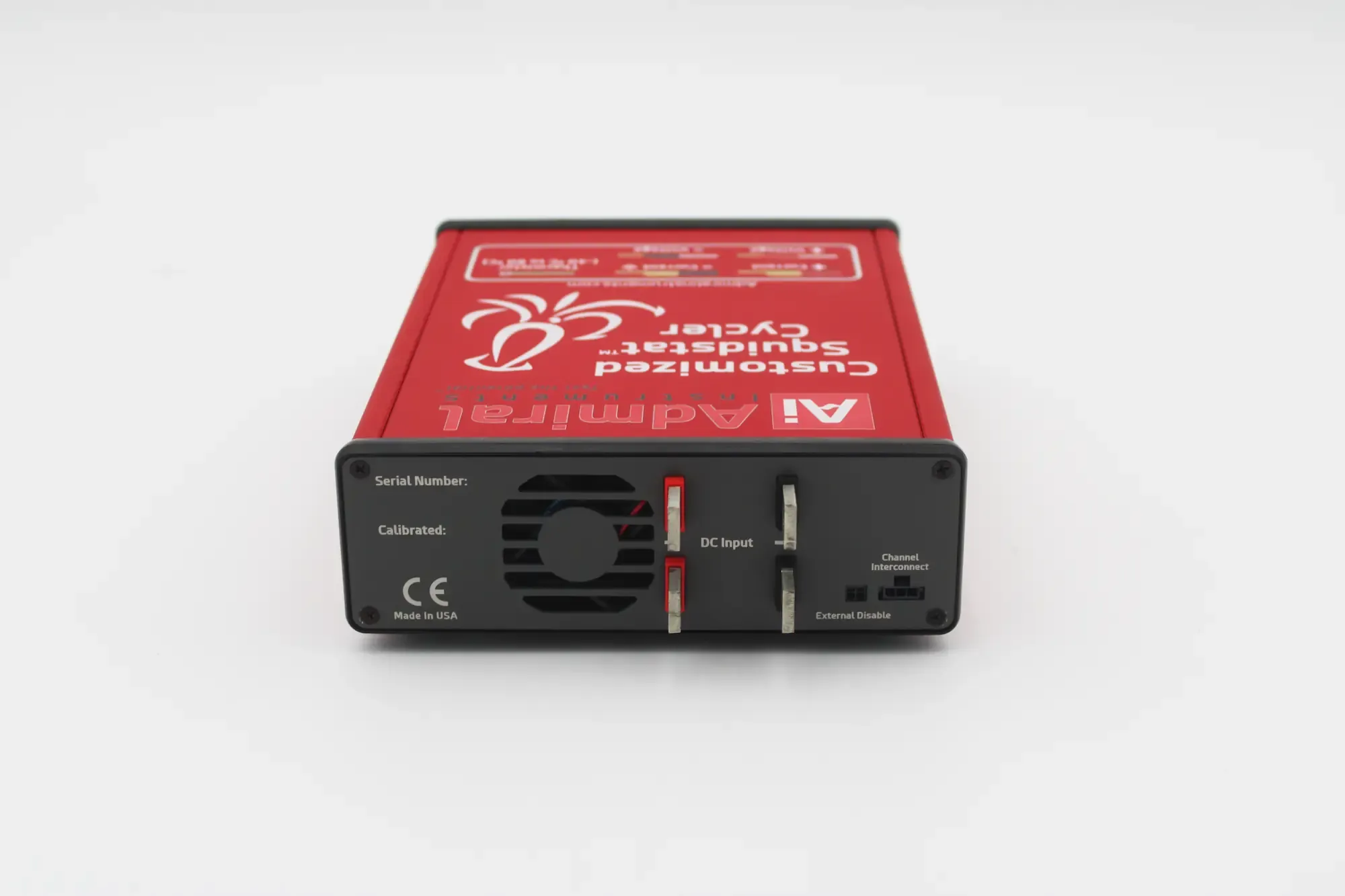
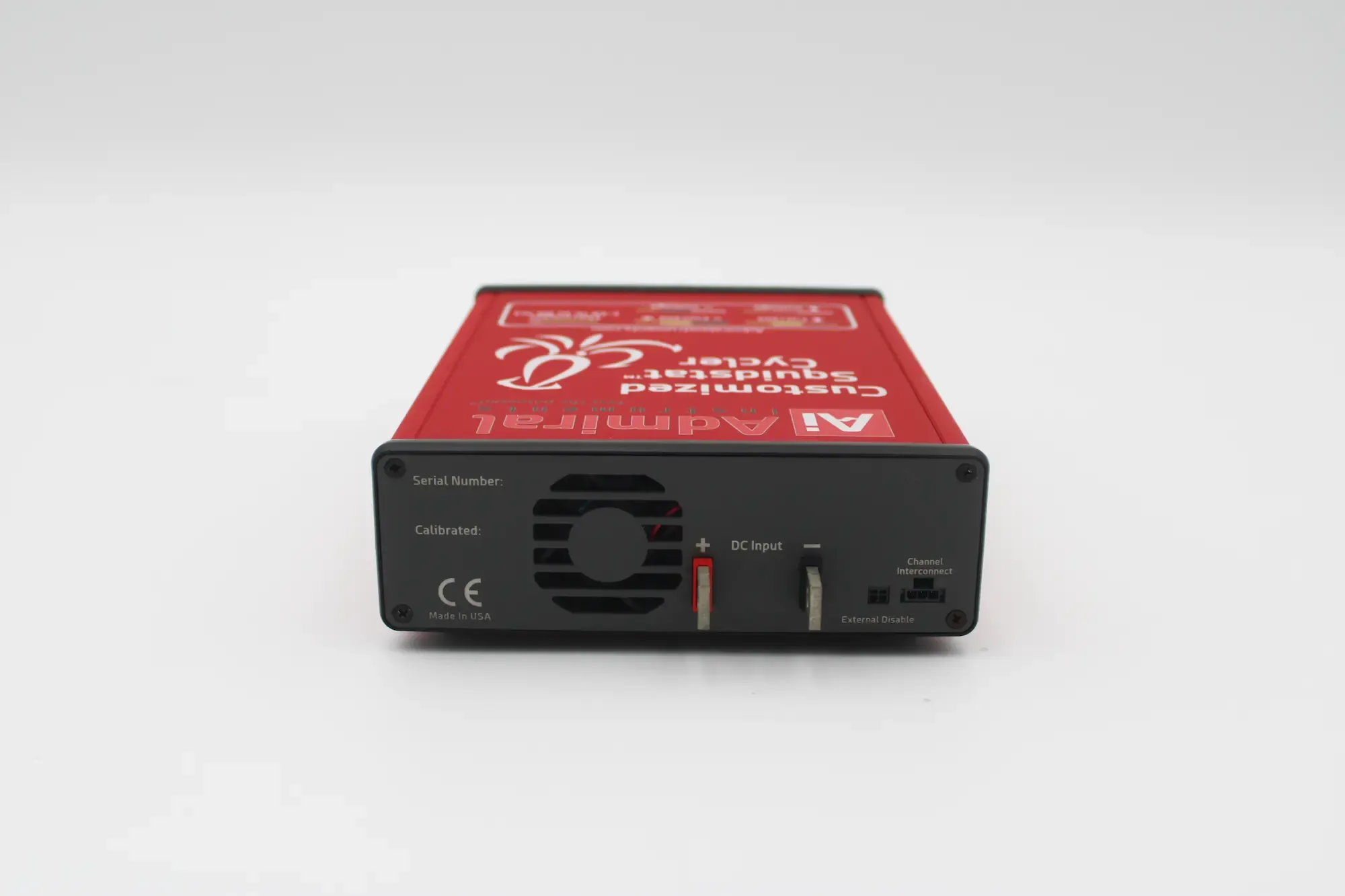
Squidstat Cycler – XChYVZA Complete Setup
X-channel battery cycler with FRA
This system supports multiple electrochemical experiments. Please contact the vendor for the complete and up-to-date list of supported experiments.
Included:
Squidstat Cycler – XChYVZA Customization Options
Squidstat Cycler – XChYVZA Important Features
Please share the answers to the following questions when requesting a quotation for a customized Squidstat Cycler:
Type
Battery cycler
Dimensions - WxDxH / cm
Combination-dependent
Weight
Combination-dependent
PC Interface
USB
Power supply
180 – 264 VAC, 47/63Hz
Form Factor
Benchtop / Lab
Channels
≥ 4, ≥ 2, ≥ 1
Cell connection
4 electrode, 3 electrode
Potentiostat modes
Potentiostatic, Galvanostatic, FRA
ADC resolution
24 bit
Ground reference
Ground only
Shortest DC data recording interval
188 μs
Shortest DC data hardware sampling interval
16 μs
Memory
No data backup
Ambient temperature when measuring
0 °C to +40 °C
Channel Cable Length
1m standard, with 2m and 3m options available
Input impedance
1.76 Mohm
Input Bias Current
2.84 μA
Digital-to-Analog Converters
24 bit
Temperature Measurement Included
-55°C to 80°C Thermistor per channel (± 1.25°C accuracy)
Max. Potential range (±) / V
60
Min. Voltage resolution (output) / μV
0.32124
Compliance voltage / ±V
10
Slew rate
1 kV/s DC, 30 kV/s Max AC
Potential Range Required (±) / V
±1 V or higher, ±4 V or higher, ±10 V or higher, ±20 V or higher, ±15 V or higher
Required Compliance Voltage
≥ 10 V, ≥ 5 V, ≥ 2 V
Current range
2 ranges, [500 mA and 5 A]
Number of current ranges
3
Current Resolution (output)
0.1% of Meas ± 19.50 mA/1.50 mA/250.0 μA 0.25% of Meas > 30 A
EIS Capability
Yes
EIS frequency range
10 µHz to 10 kHz
Max. EIS frequency range / MHz
0.01
Min. EIS frequency range / µHz
10
Accuracy Contour Plot
See images
Max. EIS Frequency range
≥ 1 kHz
Min. EIS Frequency range
≤ 100 Hz, ≤ 10 Hz, 10 mHz
0 global ratings
Verified Identity
Every review undergoes an email verification process to ensure it originates from a verified industry professional.
Verified Purchase
We manually validate "Verified Purchase" claims by cross-referencing with supplier records or identifying the equipment in peer-reviewed scientific publications.
Transparent Publishing
All verified reviews, whether positive or negative, are published without bias as long as they comply with our community guidelines.
No reviews yet. Be the first to share your thoughts!
Share your experience with this product.
Help the scientific community by sharing research papers that utilize this equipment.
Contact us to add your research.
Price on request

Price on request

Price on request