
Conductivity Meters
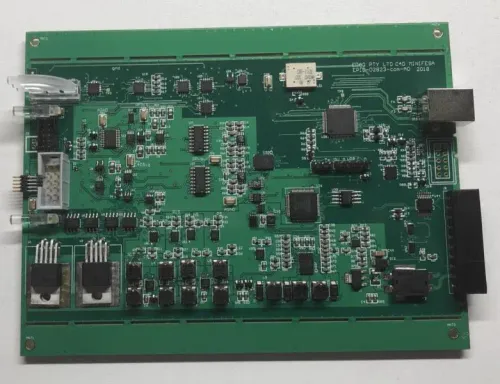
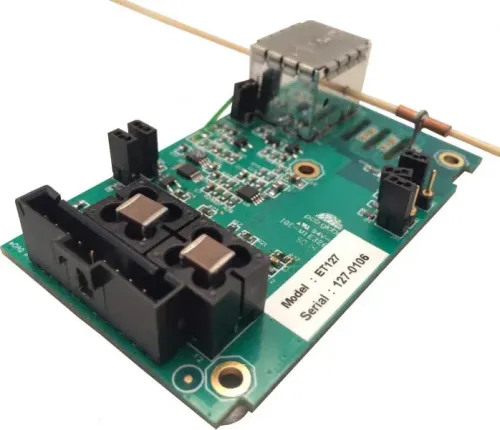
Custom and OEM Contactless Conductivity Detectors (C4D)
Price: On request
Get pricing and product details from eDAQ.
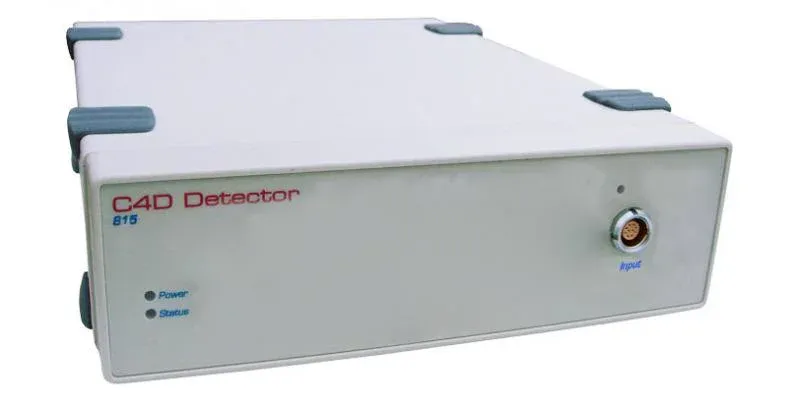
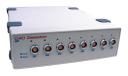
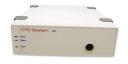
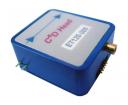
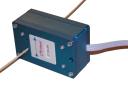
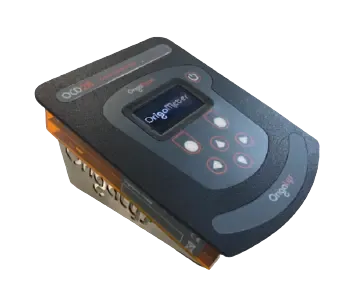
This capacitively coupled contactless conductivity detector (C4D) measures the conductivity of a solution through the wall of a capillary or tube, without the electrodes touching the sample. It is used as a detector for capillary electrophoresis, microchip electrophoresis, ion chromatography, HPLC and flow injection analysis, and as a conductivity monitor for solutions flowing through tubing. Because the sample does not touch the electrodes, hazardous, corrosive or radioactive liquids can be analysed, there is no carryover from the previous sample and the electrodes do not deteriorate or polarise.
The detector unit generates the excitation signal and records the conductivity signal. It is available in three versions: a single-channel detector (ER815), a multi-channel detector with one to eight channels that, with general purpose input modules, can also record pH, temperature, dissolved oxygen or other analog signals (ER825), and a C4D system with PowerChrom software, an analog input for an external detector such as a UV detector, and digital outputs to control external devices (ER225). The excitation frequency and amplitude can be optimised for maximum sensitivity with the included C4D Profiler software. The single and multi-channel detectors can record data with PowerChrom, with Chart or with third-party software such as ChemStation, 32 Karat or LabVIEW, and the user can switch between these options.
Each detector is used with a headstage chosen for the application, and all headstages work with all detector units:
Platforms for microfluidic chips are also available for microchip electrophoresis, alone or as part of a microchip electrophoresis kit. The same technology is used in other systems of the range, such as a 32-channel analyser that records microbial growth curves from the conductivity of the culture, and an eight-position system for low-volume samples in pipette tips, melting point tubes, NMR tubes or capillaries. If the detector has to be built into another instrument or designed around a specific application, see the custom and OEM contactless conductivity detectors.
Max. channels
1, 8
Measured parameters
Conductivity
Applications
Capillary electrophoresis, Microchip electrophoresis, Ion chromatography, HPLC, Flow injection analysis
Operating system
Windows
Software
ER815/ER825: PowerChrom, Chart or third-party software (ChemStation, 32 Karat, LabVIEW); C4D Profiler included, ER225: PowerChrom included, Chart available
Power supply
ER815/ER825: 12 V DC, approx. 10 W (mains adapter supplied), ER225: 90–250 V AC, 50/60 Hz, 25 VA
Dimensions
200 × 65 × 250 mm (W × H × D)
Weight
ER815/ER825: 1.8 kg max, ER225: 1.5 kg
Ambient Operating Conditions
0–35 °C at 0–90 % RH non-condensing
Conductivity Measurement Ranges
ET120: 20–3200 µS/cm background electrolyte (depends on capillary ID), ET125: 20 µS/cm to 200 mS/cm (depends on tubing ID), ET130: 150 µS/cm to 15 mS/cm, ET131: 20 µS/cm to 200 mS/cm full scale (factory-configured)
Excitation frequency
ER815/ER825: 20–2000 kHz, ER225: 100–1200 kHz
Excitation amplitude
ER815: 1–20 V p-p set on the unit, up to 200 V p-p at the headstage, ER825: 2–40 V p-p set on the unit, ER225: up to 200 V at the headstage
Tubing Size
1/16" OD (1.6mm OD), 350–385 µm OD capillary (ET120)
Inputs / Outputs
ER815/ER825: analog output ±5 V (BNC), trigger input (contact closure or TTL), ER225: analog input for an external detector, 4 digital outputs (contact closure or TTL)
ADC resolution
ER815/ER825: 24 bit (PowerChrom or serial port), 16 bit (Chart), ER225: 24-bit ADC, 22-bit system resolution
0 global ratings
Verified Identity
Every review undergoes an email verification process to ensure it originates from a verified industry professional.
Verified Purchase
We manually validate "Verified Purchase" claims by cross-referencing with supplier records or identifying the equipment in peer-reviewed scientific publications.
Transparent Publishing
All verified reviews, whether positive or negative, are published without bias as long as they comply with our community guidelines.
No reviews yet. Be the first to share your thoughts!
Share your experience with this product.
Help the scientific community by sharing research papers that utilize this equipment.
Contact us to add your research.
Price: On request

Price on request