
Graphite Plates and Glassy Carbon Substrates (Vitreous)
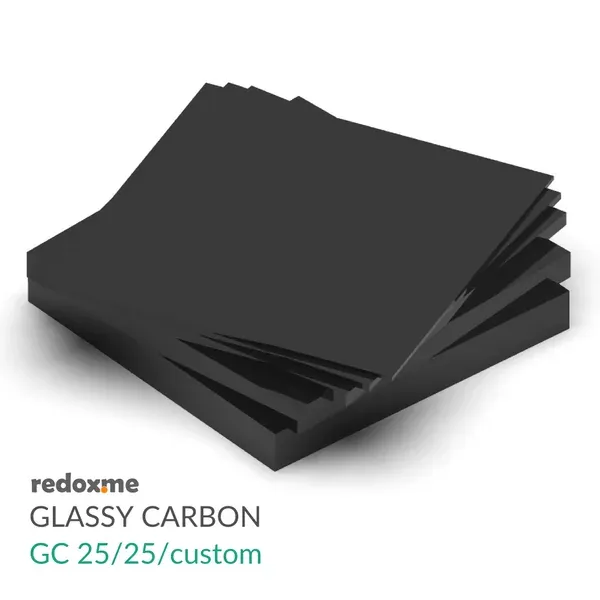
Glassy (Vitreous) Carbon Substrate - GC 25/25
Price on request
Get pricing and product details from Redoxme.
Price: On Request
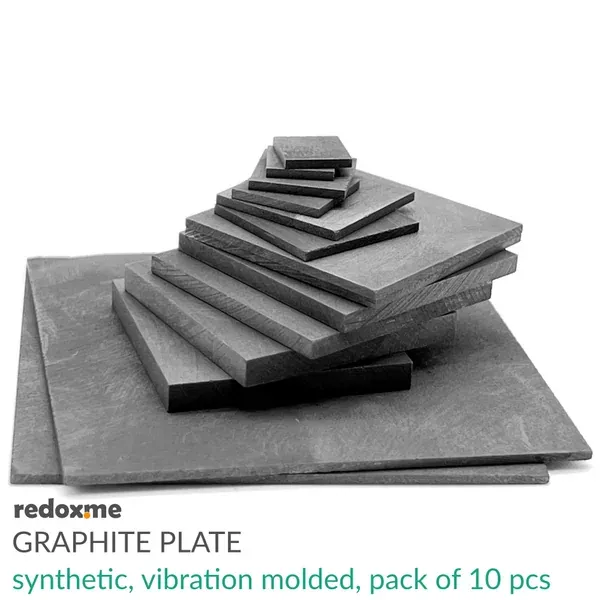
Synthetic polycrystalline graphite plate, manufactured by vibration molding. Graphite provides a unique combination of cost-effectiveness, ease of surface renewal, and higher effective surface area due to its porous structure. Commonly used as a cost-effective counter electrode in electrochemical measurements.
When to choose graphite vs glassy carbon
Graphite is inherently more cost-effective and favored for preliminary studies, bulk experiments, or budget-limited applications. Its porous structure provides a larger effective surface area, advantageous in assays requiring increased sensitivity. Graphite's ease of surface renewal ensures consistent measurements across experiments.
Examples of use
Ensure the graphite electrode surface is clean and contaminant-free before use. The surface can be easily mechanically polished between uses. Fit the plate into your electrochemical cell and ensure a secure potentiostat connection. Given its porous nature, allow the electrode to reach a stable background current before recording measurements. After use, rinse with appropriate solvents and store in a dry place.
10 x graphite plate
Available Sizes
7 x 7 mm, 10 x 10 mm, 15 x 15 mm, 25 x 25 mm, 50 x 50 mm, 100 x 100 mm
Thickness
1 mm, 2 mm, 3 mm
Density
1.75 g/cm³
Manufacturing Process
Vibration Molding
Electrode Material
Synthetic Polycrystalline Graphite
Coefficient of Thermal Expansion (20-200 °C)
2.4×10⁻⁶ K⁻¹
Electric Resistivity
8 µΩ·m
Flexural Strength
17.5 MPa
Compressive Strength
38 MPa
Medium Grain Size
800 µm
Ash Content
500 PPM
Pack Size
10 pcs
Thermal Conductivity
140 W·m⁻¹K⁻¹
0 global ratings
Verified Identity
Every review undergoes an email verification process to ensure it originates from a verified industry professional.
Verified Purchase
We manually validate "Verified Purchase" claims by cross-referencing with supplier records or identifying the equipment in peer-reviewed scientific publications.
Transparent Publishing
All verified reviews, whether positive or negative, are published without bias as long as they comply with our community guidelines.
No reviews yet. Be the first to share your thoughts!
Share your experience with this product.
Help the scientific community by sharing research papers that utilize this equipment.
Contact us to add your research.
Price on request
Price on request