
Standard electrochemical cells
Standard Electrochemical Dual Holder Cell
Price on request
Get pricing and product details from Redoxme.
Price: On Request
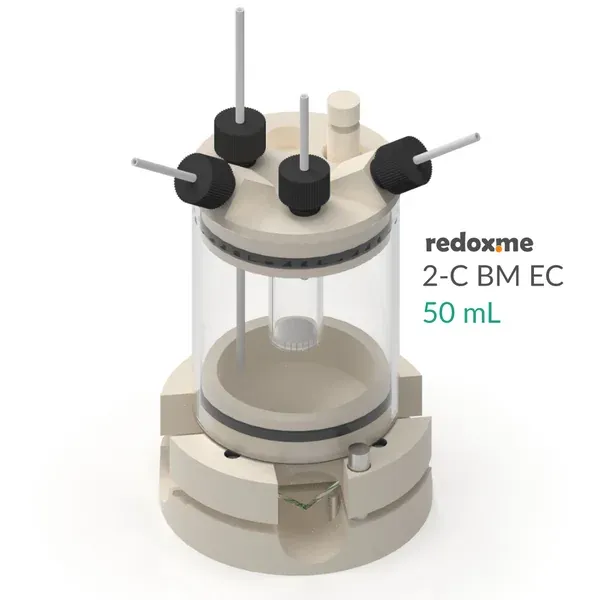
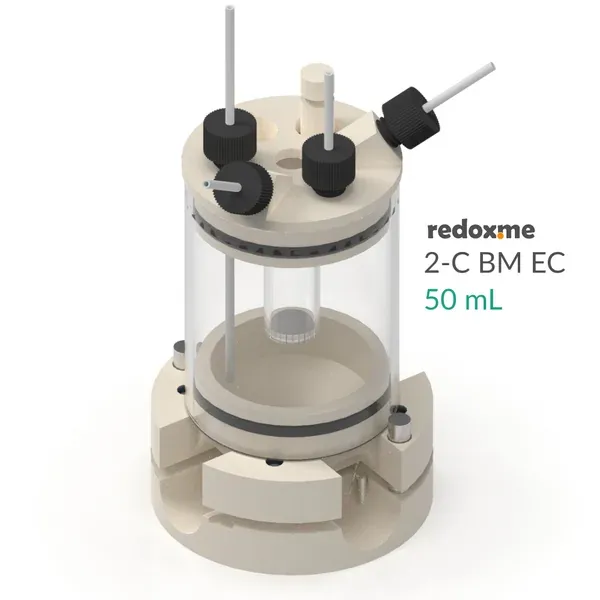
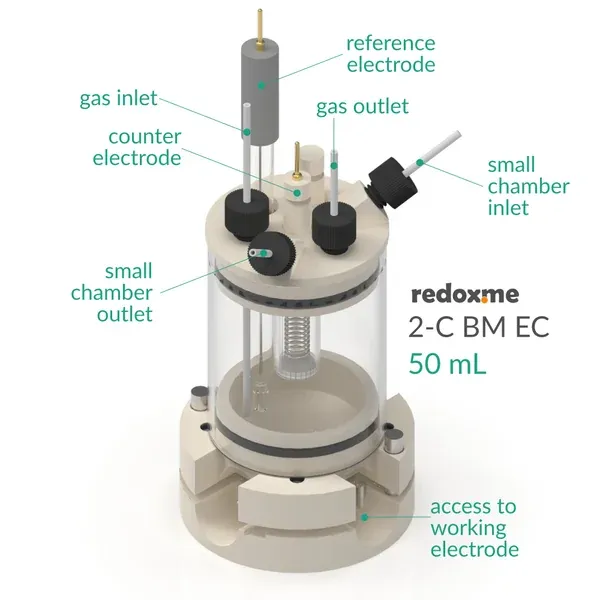
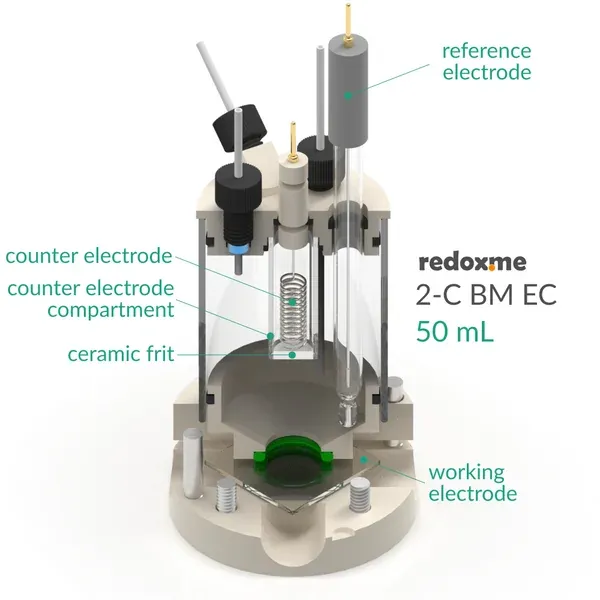
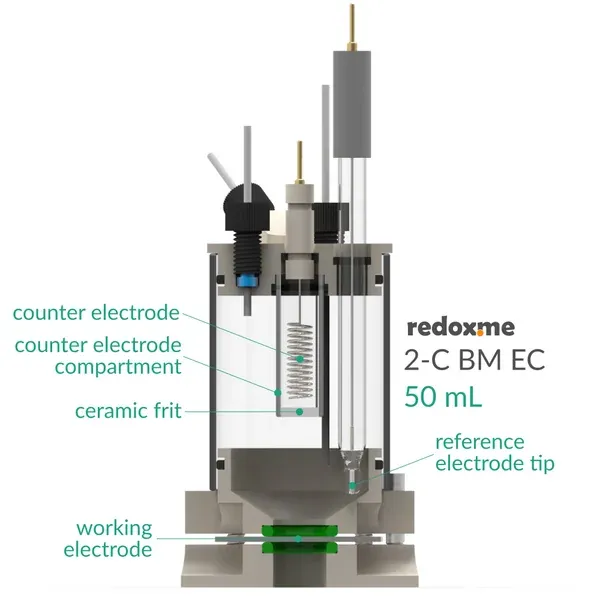
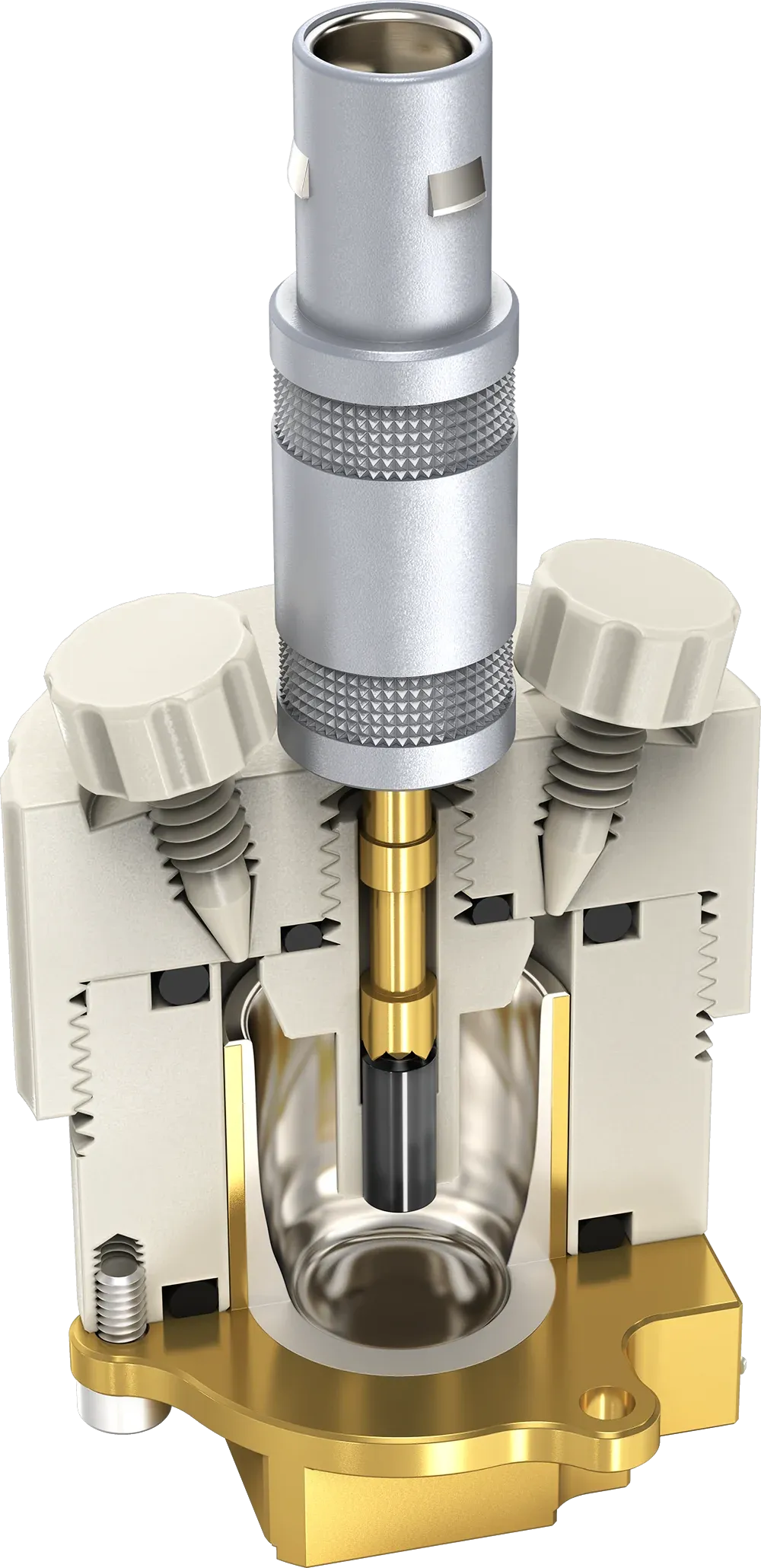
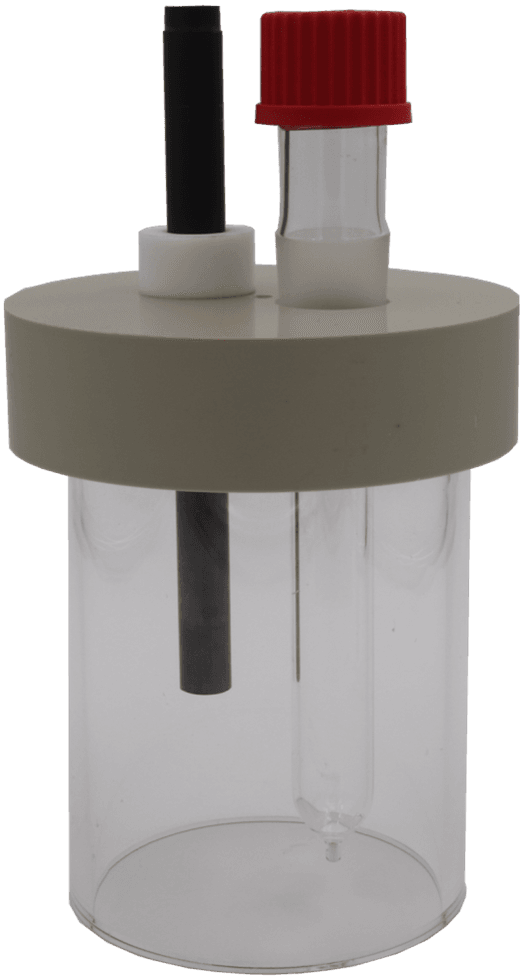
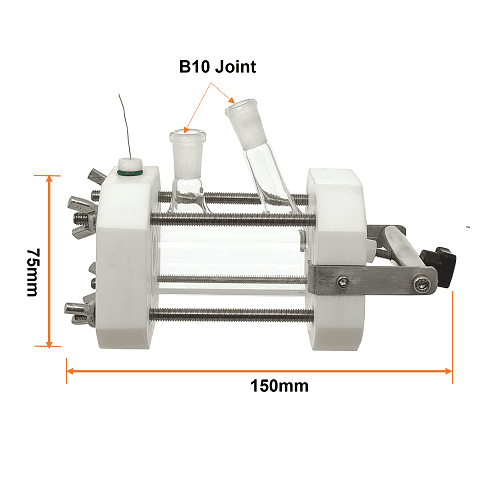
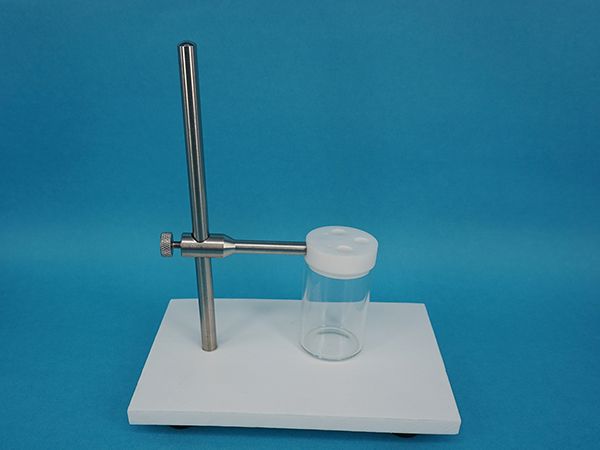
This is a stationary solution two-compartment cell for measurements of a thin film deposited on a flat substrate. The sample is loaded from the bottom via screw mount, while counter and reference electrodes are mounted in a top casing (either 2-, or 3-electrode setup). The counter electrode is placed in a small glass compartment separated from the other electrodes by a ceramic frit (2 mm thick Al2O3 nanoporous disk). This small compartment is equipped with a separate inlet and outlet for easy filling with an electrolyte and evacuation of gaseous products. The magnetic mount version of this cell, as well as customization for other substrate sizes, is available on request. The cell elements are constructed with materials that are inert to the sample (glass and PEEK). It fits aqueous (FKM/EPDM O-Rings) and organic solvent (FFKM O-Rings) electrolyte requirements. The construction is gas-tight and can be used when the removal and exclusion of contaminants such as oxygen and water is required by bubbling of an inert gas through the electrolyte.
Application note The reference electrode tip should be placed close to the bottom of the chamber (3-5 mm), where the working electrode is exposed to the electrolyte. This will ensure a negligible potential drop throughout the electrolyte solution for low-current experiments. Various auxiliary electrodes are suitable including metal wire, metal foil electrodes and graphite rod. The bubbling of gas through the solution must be stopped prior to experiment.
Product includes
Nominal Exposure Area
1 cm²
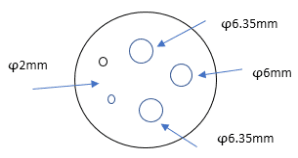
Electrode Plug Diameter (Cell)
6 mm
Minimum Substrate Size
17 mm × 25 mm
Recommended Substrate Size
25 mm × 25 mm
Maximum Substrate Thickness
4 mm
Number of Electrode Slots
3
Cell Body Material
Glass and PEEK
O-Ring Material (Aqueous Electrolyte)
FKM / EPDM
O-Ring Material (Organic Electrolyte)
FFKM
Minimum Electrolyte Volume
25 mL
Maximum Electrolyte Volume
45 mL
Compatible Electrolyte Types
Aqueous, Organic
0 global ratings
Verified Identity
Every review undergoes an email verification process to ensure it originates from a verified industry professional.
Verified Purchase
We manually validate "Verified Purchase" claims by cross-referencing with supplier records or identifying the equipment in peer-reviewed scientific publications.
Transparent Publishing
All verified reviews, whether positive or negative, are published without bias as long as they comply with our community guidelines.
No reviews yet. Be the first to share your thoughts!
Share your experience with this product.
Help the scientific community by sharing research papers that utilize this equipment.
Contact us to add your research.
Price on request

Price: On request

Price on request

Price on request

Price on request
Price on request
Price on request
Price: 355 EUR

Price: 422.00 USD

Price on request