
Electrosynthesis benchtop reactors
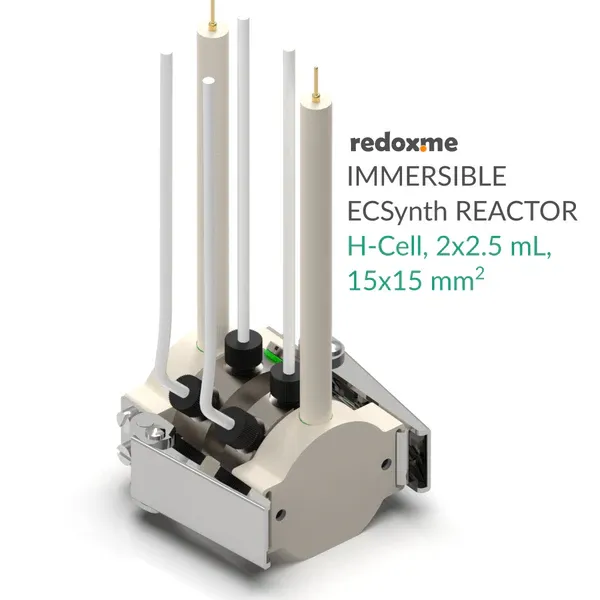
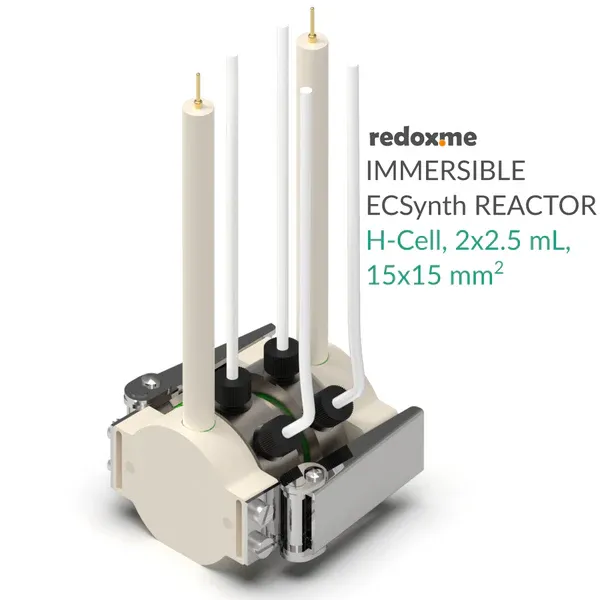
Immersible Electrosynthesis Reactor, H-Cell, 2x1.5 mL, 15x15 mm2
Price on request
Price: On Request
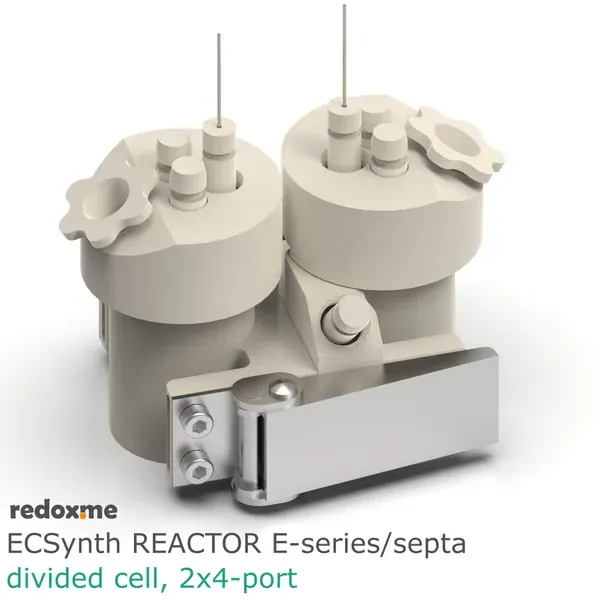
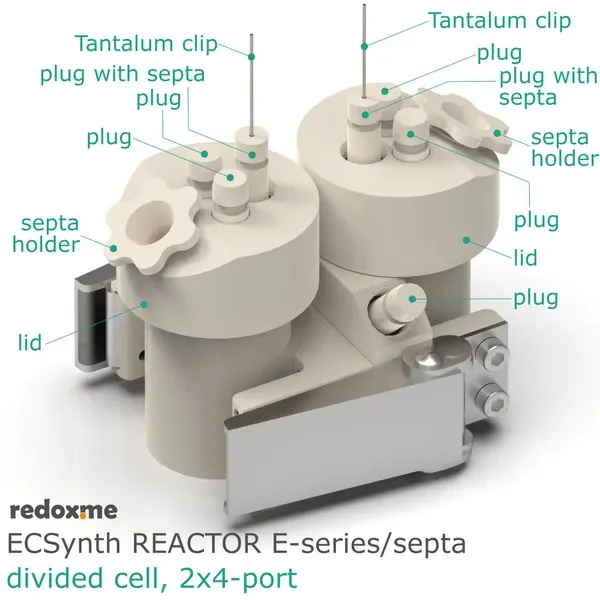
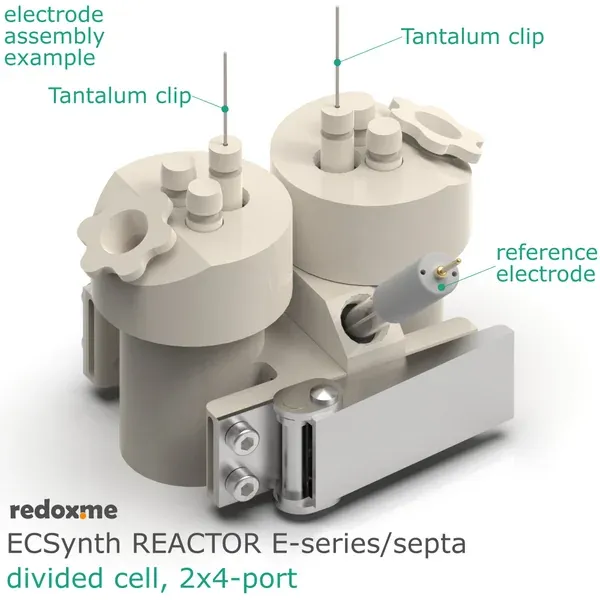
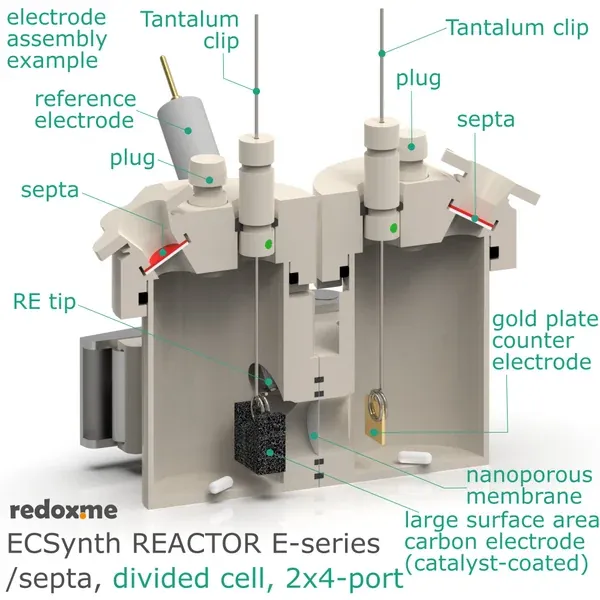
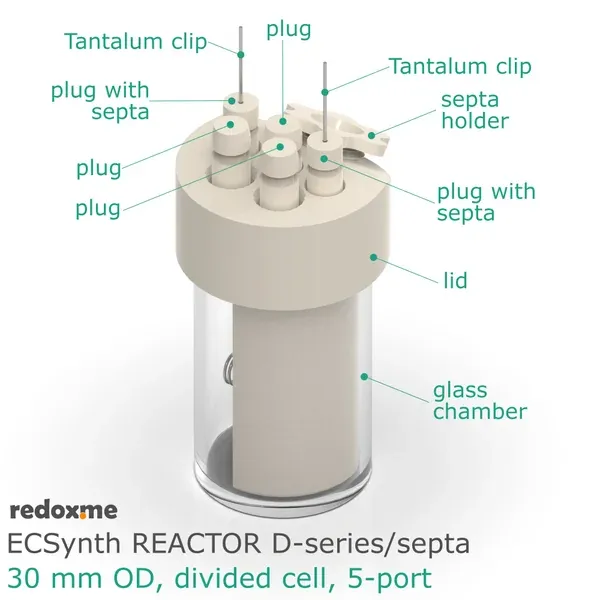
Electrosynthesis Reactor E-series is a two-compartment batch cell that contains a solution of the substrates and reagents and operates for the time needed to complete the desired reaction until all the starting material in the working electrode compartment is consumed. The electrolytes in working and counter electrode compartments are separated by ion-exchange membrane or nanoporous membrane (13 mm dia.). The reaction mixture can be stirred using a magnetic stirrer to have a homogeneous concentration throughout the working and/or counter electrode compartment.
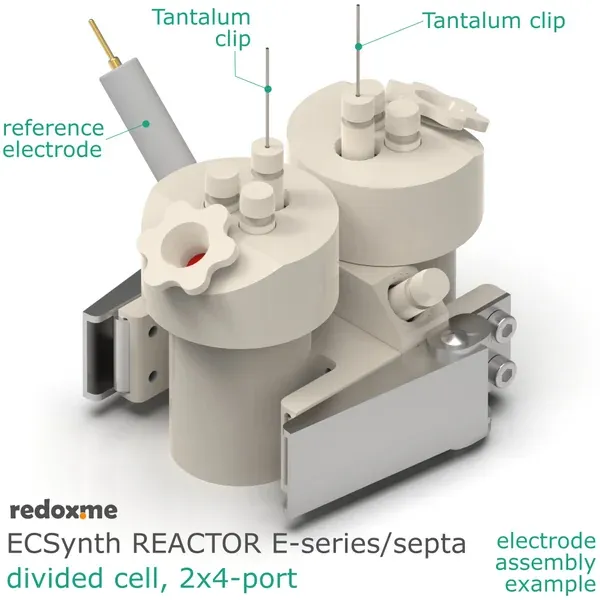
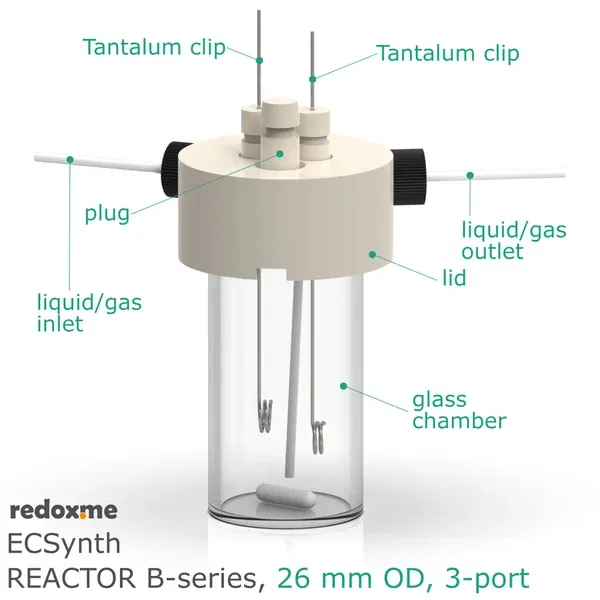
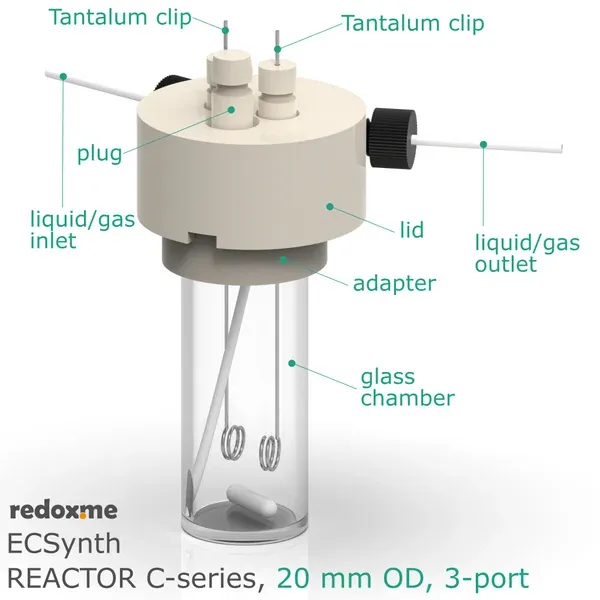
In this reactor, a solid anode (positive) and cathode (negative) are installed in Tantalum clips. If a 3-electrode setup is required, the reference electrode is mounted in the working electrode compartment. Such electrode assembly is introduced into a solution containing the substrate and a supporting electrolyte, in order to carry the current through the cell separated by the membrane. The reactor elements are constructed with materials that are inert to most of the aqueous/organic reaction environments (PEEK, FKM/FFKM O-Rings). The construction of this reactor is liquid- and gas-tight.
Application note This electrosynthesis reactor is suitable for both constant current and constant potential electrolysis in aqueous or organic media. As this is a divided cell, it can be used when the substrate and product formed could react at the counter electrode, or with the products produced as a counter reaction. Various anode materials are suitable for this reactor including: (i) noble metals such as platinum, platinum metals or their alloys, and gold, (ii) carbon allotropes such as graphite, reticulated vitreous carbon or glassy carbon, (iii) Boron-Doped Diamond plate and thin film on a substrate, and (iv) other metals such as nickel, lead or lead oxide. As the corrosive effects are not common in cathode materials, there is a wider variety of materials to choose including: (i) Boron-Doped Diamond plate and thin film on a substrate, (ii) platinum plate or wire and (iii) other metals such as copper, nickel, stainless steel, lead and tin. Concerning the form of the anode and the cathode, the materials with a high surface-area-to-volume ratio are preferential. Copper and nickel are usually used in a form of foam, while the other metals are in a form of plates, meshes and wires. Typical reference electrodes include Ag/Ag+ RE (organic media), Ag/AgCl (aqueous media) and pseudo-RE (Pt, Au, Ag). None of the above mentioned electrodes is included in the reactor, so they need to be added to the quotation separately.
Product includes
Maximum Electrolyte Volume
2x18 mL
Minimum Electrolyte Volume
2x7 mL
Max. Operation Temperature
200 °C
Minimum operational temperature
-20 °C
Electrode plug diameter (reactor)
6 mm
Membrane diameter
13 mm
Distance between anode and cathode
23 mm
Number of Electrode Slots
8
Tubing Size
1 mm ID / 1.6 mm OD
Septa size
ND9
Get pricing and product details from Redoxme.
0 global ratings
Verified Identity
Every review undergoes an email verification process to ensure it originates from a verified industry professional.
Verified Purchase
We manually validate "Verified Purchase" claims by cross-referencing with supplier records or identifying the equipment in peer-reviewed scientific publications.
Transparent Publishing
All verified reviews, whether positive or negative, are published without bias as long as they comply with our community guidelines.
No reviews yet. Be the first to share your thoughts!
Share your experience with this product.
Help the scientific community by sharing research papers that utilize this equipment.
Contact us to add your research.
Price on request
Price on request
Price on request
Price on request
Price on request
Price on request
Price on request
Price on request
Price on request
Price on request