
Electrosynthesis benchtop reactors
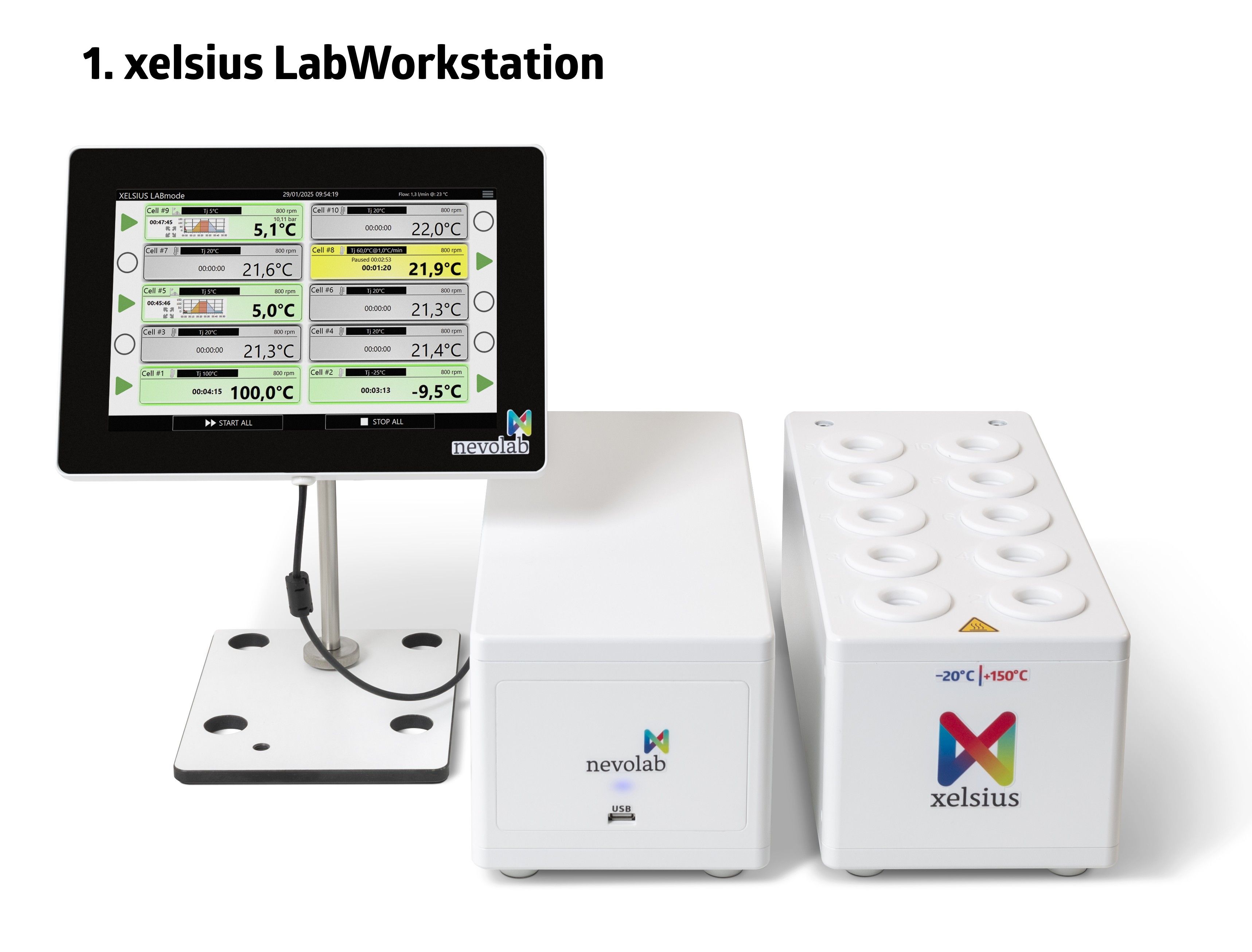
ElectroSynth xelsius LabWorkstation
Price: On request
4.0Get pricing and product details from Redoxme.
Price: On Request
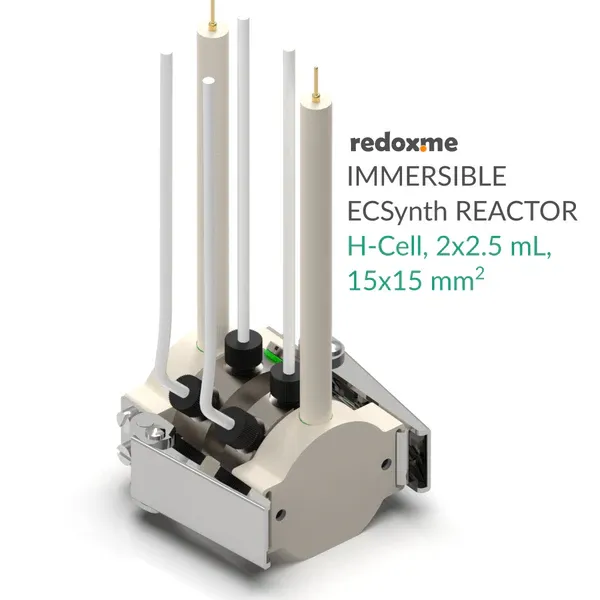
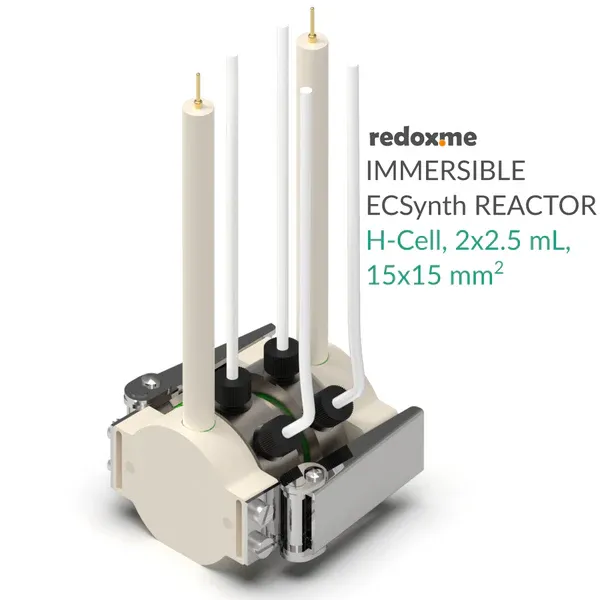
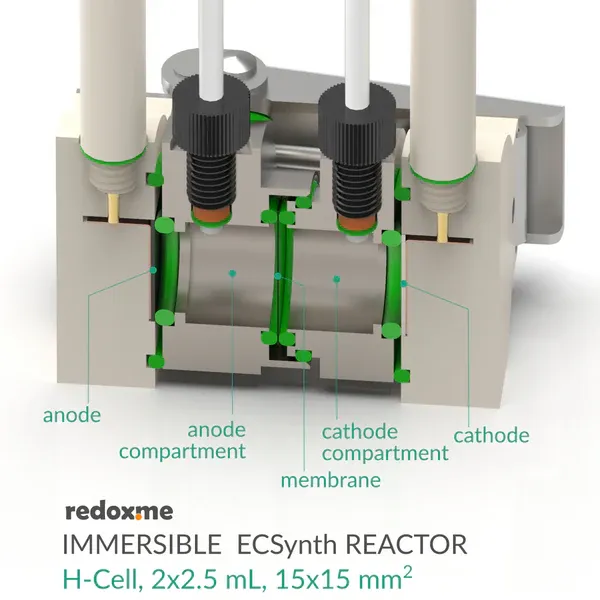
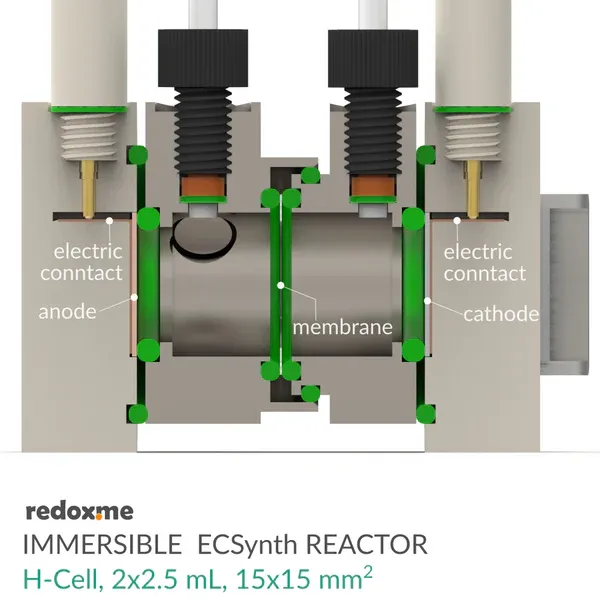
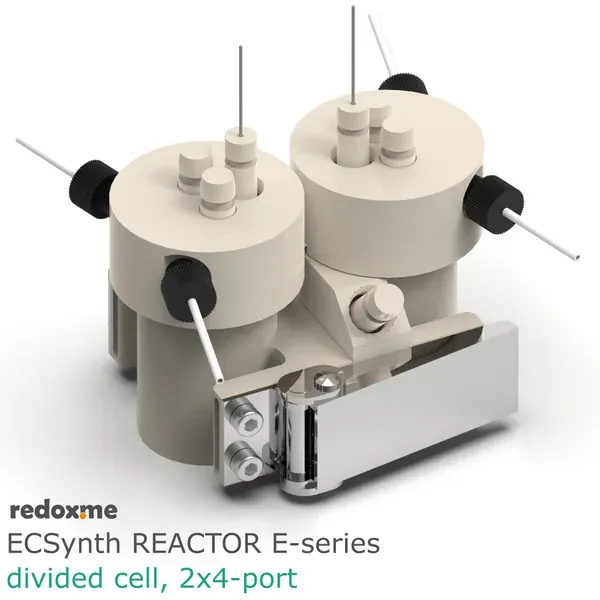
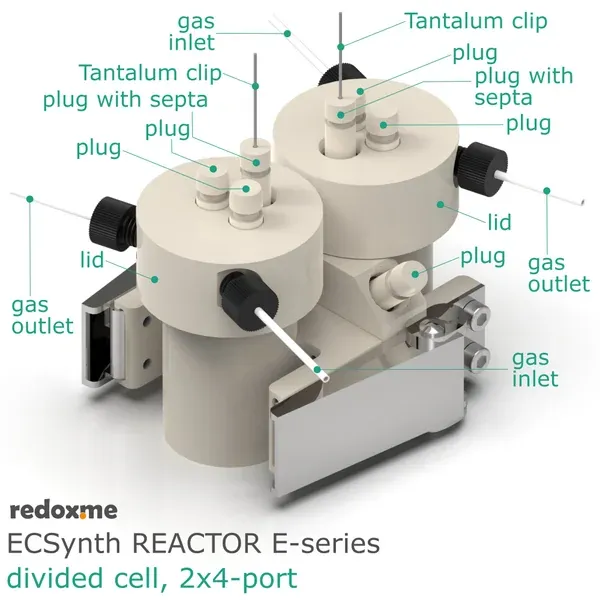
It is a two-compartment electrolytic flow cell designed specifically for electrosynthesis experiments. The whole cell can be immersed in a thermostatic bath to control the process temperature. Both chambers, are made of Titanium which ensures proper heat exchange while providing chemical resistance for a broad range of chemicals. Thanks to the application of adjustable hook clamps, the reactor can be easily assembled and disassembled within seconds.
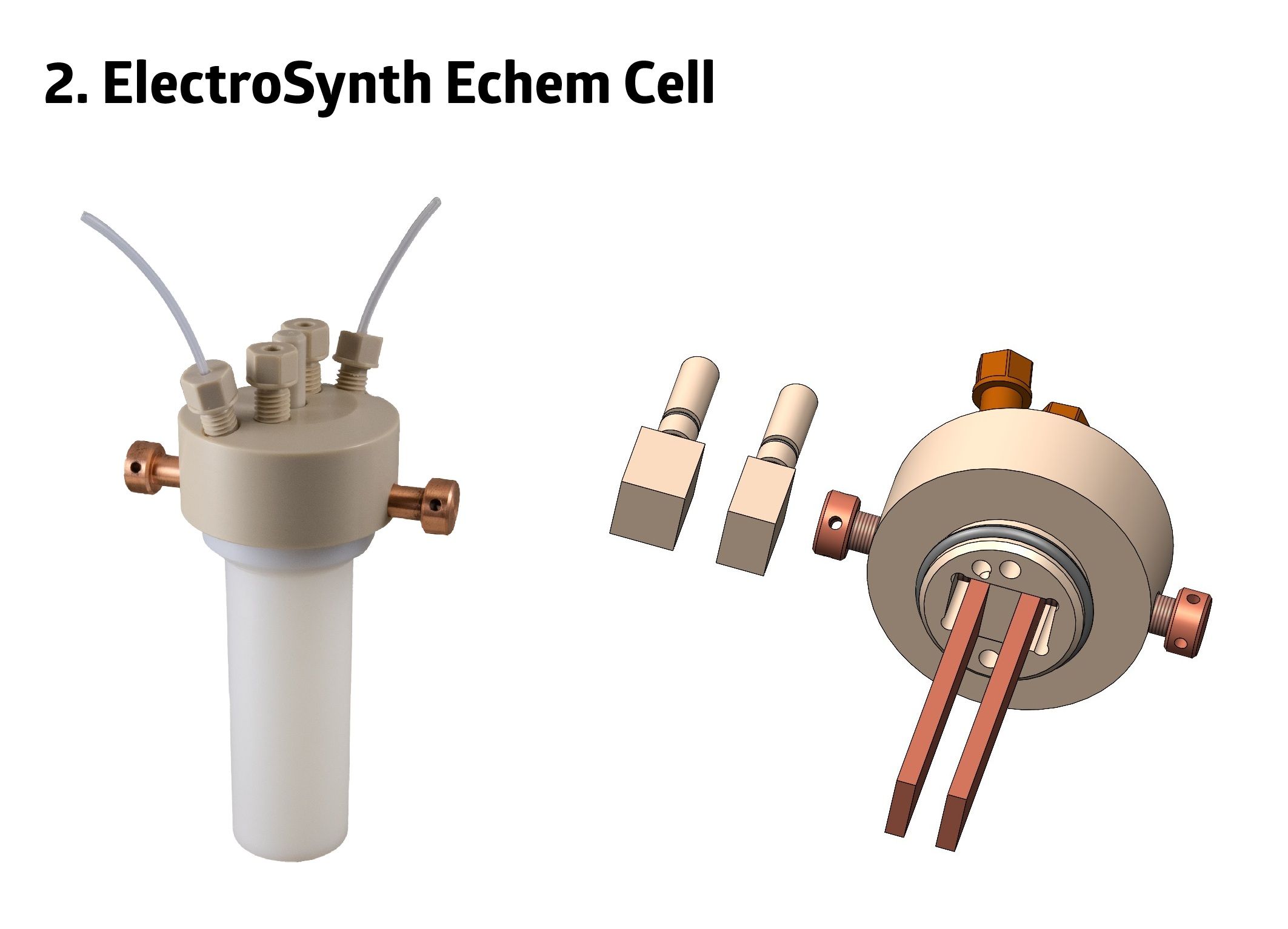
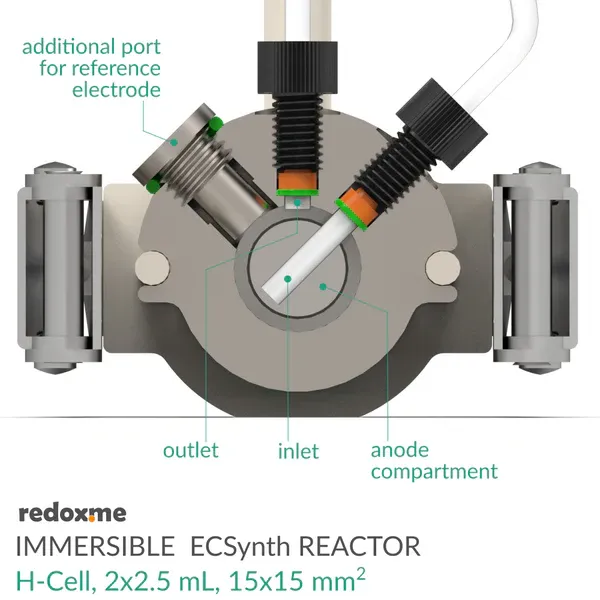
The reactor consists mainly of the following elements: (i) Titanium anode chamber with inlet/outlet and additional electrode terminal (plugged when unused), (ii) Titanium cathode chamber with inlet/outlet, and (iii) two electrode holders with a back electrode contact and a rod contact to the external circuit. Both electrodes (not included in the setup) are in a form of a flat plate with dimensions of 15 mm x 15 mm x 0.5 mm each (other sizes are available on request). Due to the back-contact connection between current collector and the electrode, both electrodes should be made of a conductive material. Typically, Boron-Doped Diamond plate is used as an anode while Zirconium plate is used as a cathode. Other electrodes configurations include: Glassy Carbon Plates, Nobel Metal Plates (Platinum, Gold, Palladium and Silver), and other metal plates (Stainless Steel 316L/317L, Nickel, Titanium, etc.). The membrane is circular with a diameter in a range of 20 to 25 mm, and thickness up to 1 mm.
During the electrosynthesis process, the liquid electrolyte is circulated from the external thermoregulated reservoirs through both compartments separately. When the flow rate is sufficient, the flux hits the chamber wall and spreads evenly in the whole chamber volume providing proper mixing. The reacted liquid is then evacuated through the outlet located on the top of the chamber. In some cases, the reactor may also operate in a stagnant mode. The reactor elements that are in contact with the synthesized products are made of Titanium Grade 7. The seal is provided by O-Rings (FKM for aqueous synthesis and FFKM for organic synthesis). Other reactor elements that are in contact only with an external thermostatic bath are made of PEEK (electrodes holders and fittings), PTFE/FEP (tubbing), zinc plated steel (adjustable hook clamps). O-Rings exposed to the thermostatic bath are made of FKM. The construction is liquid tight. Operational temperatures lay in a range of -25 up to 200 deg C. The cell may be adopted to broader temperature range on request (-45 up to 300 deg).
Application note Typical applications include a) electrochemical electrosynthesis in organic and aqueous electrolytes (anodic oxidation, cathodic reductions, redox reactions and electrofluorination), b) electrochemical waste-water treatment and c) electrochemical pre-treatment prior to biological processes.
Product includes
Maximum Electrolyte Volume
2.5 mL/chamber
Max. Operation Temperature
200 °C
Minimum operational temperature
-20 °C
Distance between anode and cathode
30 mm
Nominal electrode exposure area
1 cm2 (11.3 mm dia.)
Nominal membrane exposure area
1 cm2 (11.3 mm dia.)
Additional electrode diameter
6 mm
Electrode size
15 mm x 15 mm x 0.5 mm
Membrane size (reactor)
1 cm2 (11.3 mm dia.)
Chamber material
Titanium grade 7
Tubing Size
2 mm ID, 3 mm OD
0 global ratings
Verified Identity
Every review undergoes an email verification process to ensure it originates from a verified industry professional.
Verified Purchase
We manually validate "Verified Purchase" claims by cross-referencing with supplier records or identifying the equipment in peer-reviewed scientific publications.
Transparent Publishing
All verified reviews, whether positive or negative, are published without bias as long as they comply with our community guidelines.
No reviews yet. Be the first to share your thoughts!
Share your experience with this product.
Help the scientific community by sharing research papers that utilize this equipment.
Contact us to add your research.
Price: On request
4.0
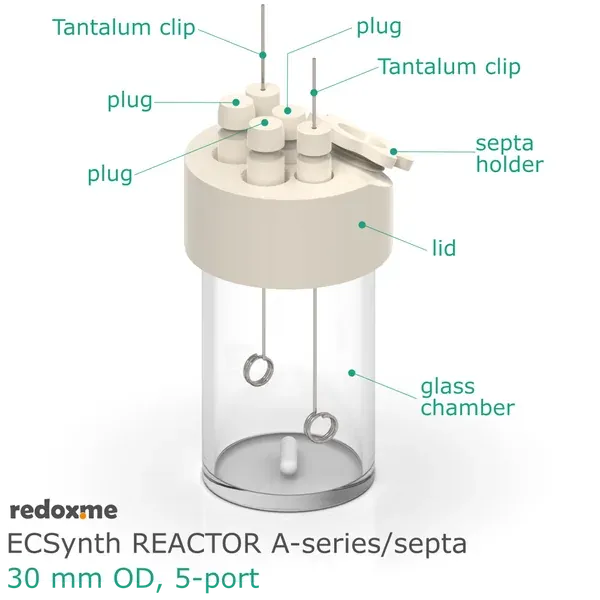
Price on request
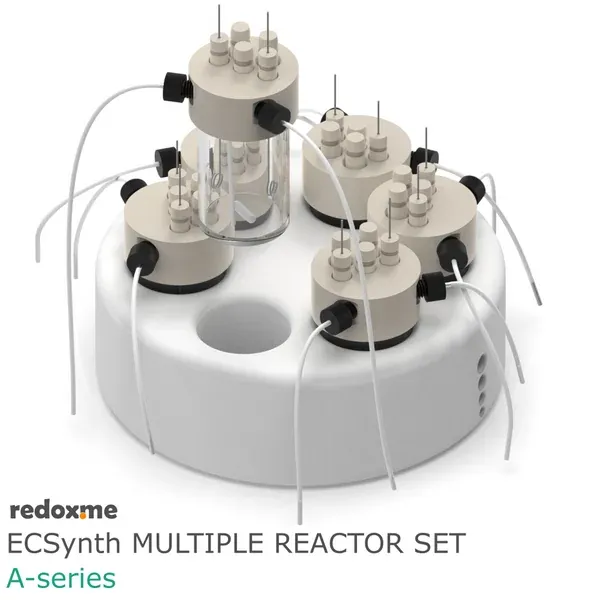
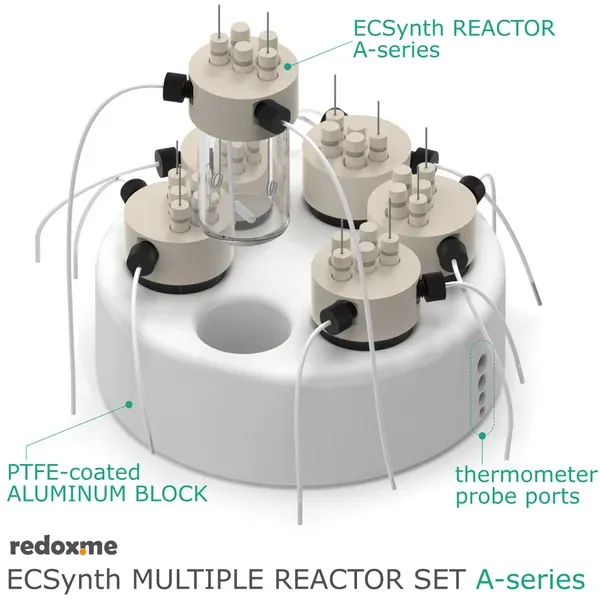
Price on request
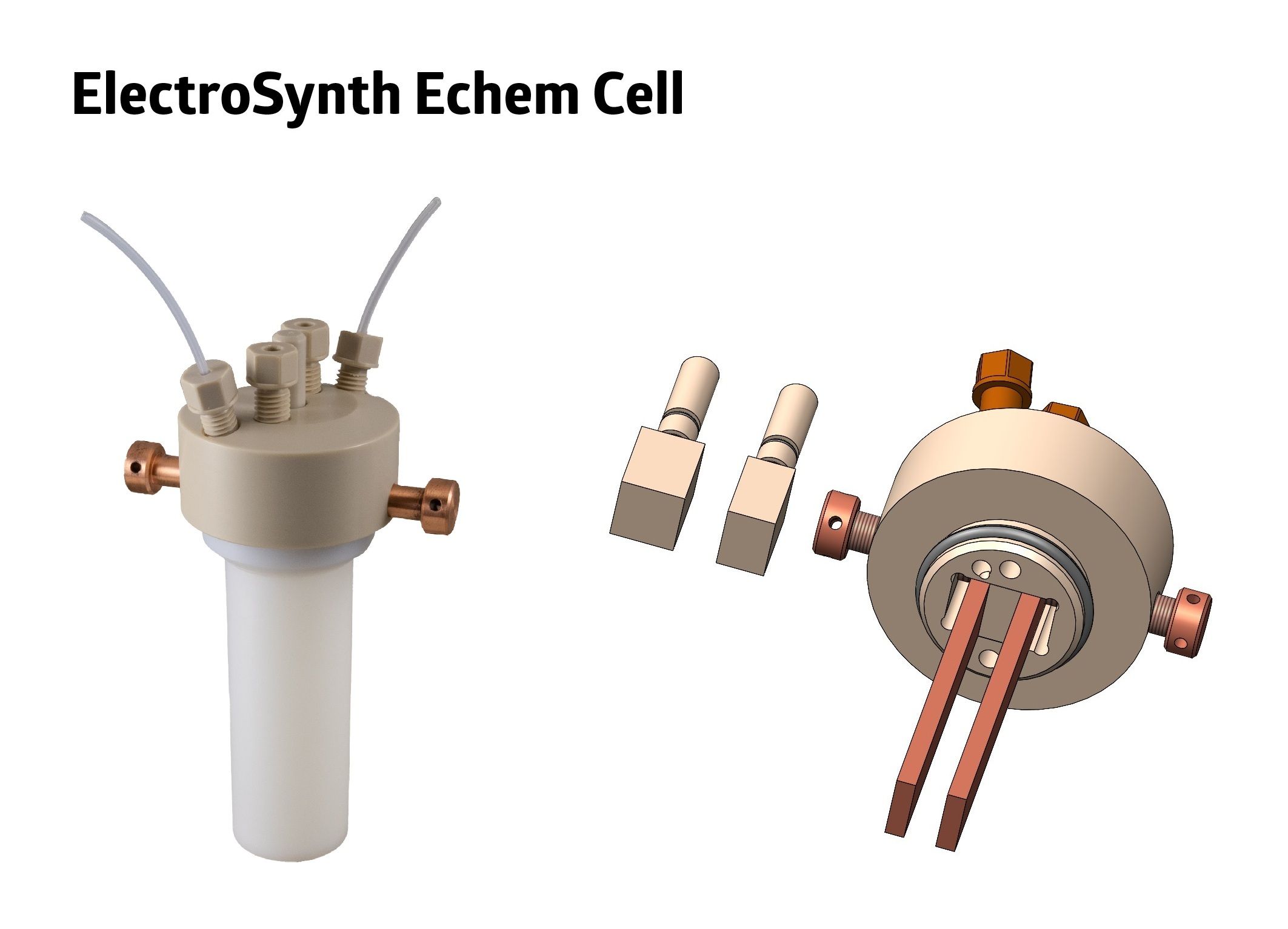
Price: On request
Price on request

Price on request
Price on request
Price on request
Price on request
Price on request