
Photoelectrochemical cells
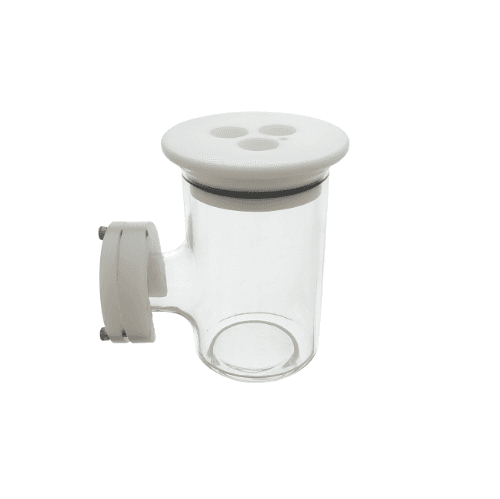
Photo-Electrochemical cell (250 ml) with quartz window
Price: 224.00 USD
Get pricing and product details from Redoxme.
Price: On Request
Overview
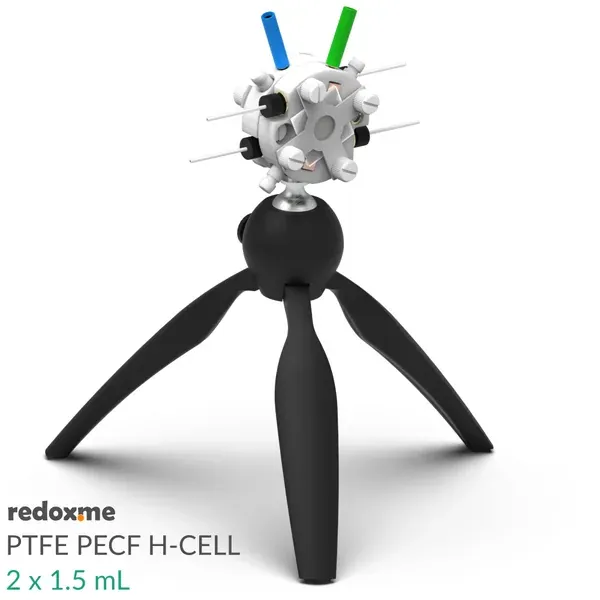
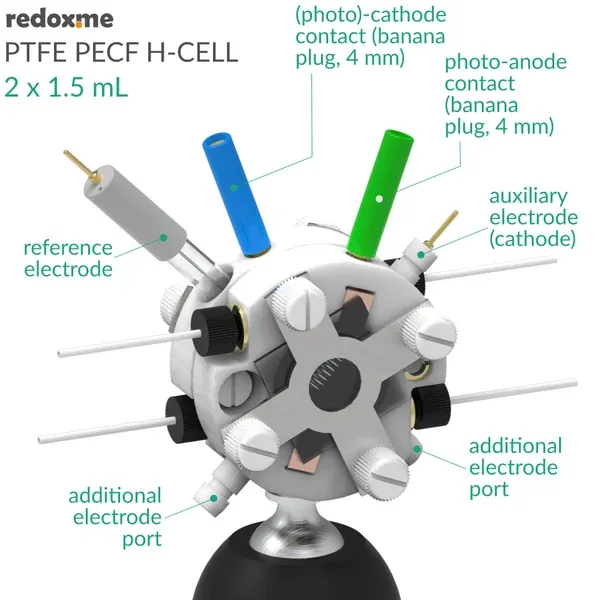
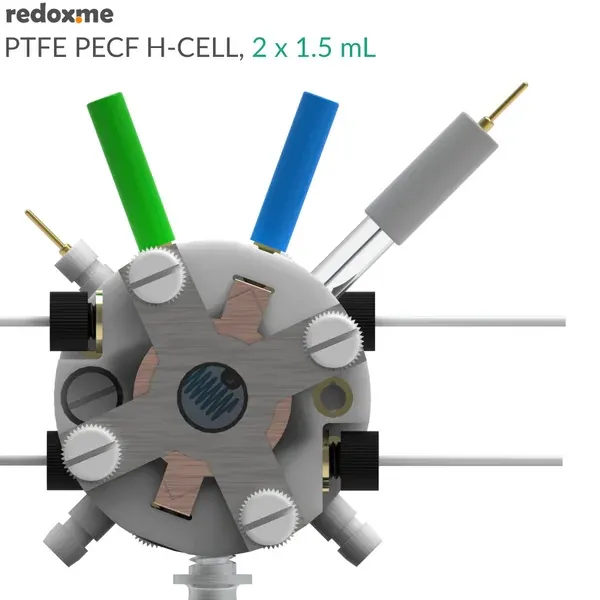
PTFE variant of the PECF H-Cell 2x1.5 mL. All elements in contact with electrolyte or its fumes are made of PTFE and other fluorinated materials (tubing, fittings, O-Rings). Used wherever PEEK fails, specifically with aggressive electrolytes including: aqua regia, bromine, carbolic acid (phenol), carbon disulfide, chlorosulfonic acid, chromic acid (>50%), hydrofluoric acid, nitric acid (>50%), sulphuric acid (96%), fuming sulphuric acid, and other strongly oxidising or halogenated media.
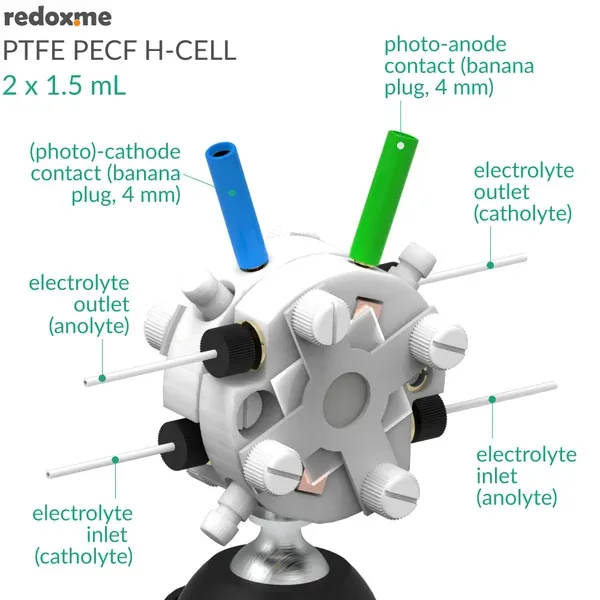
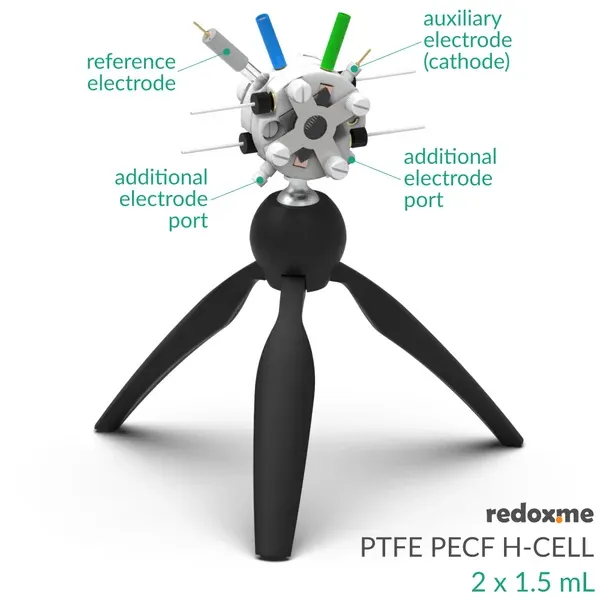
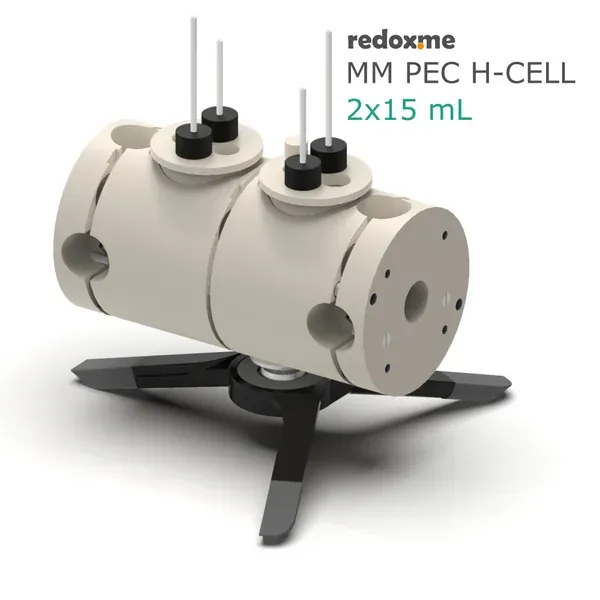
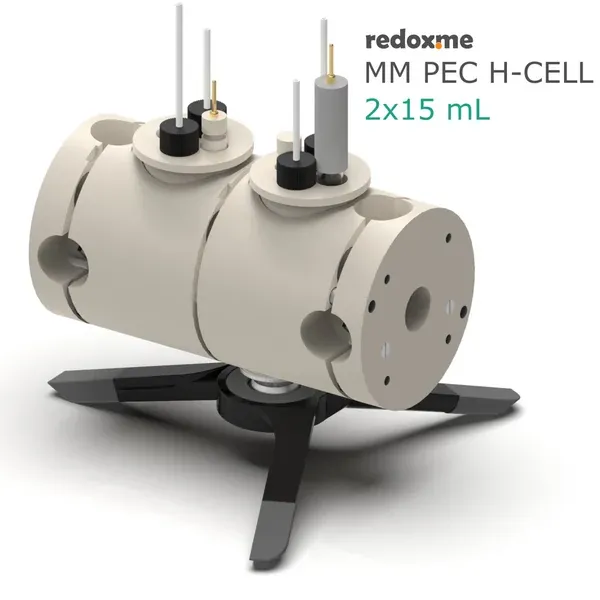
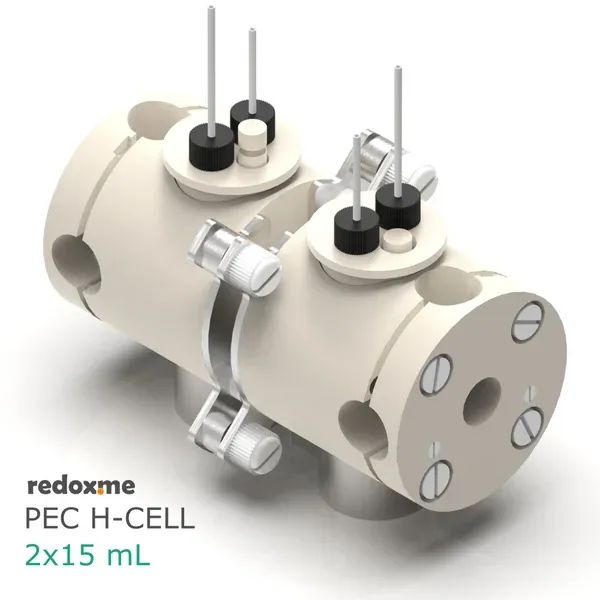
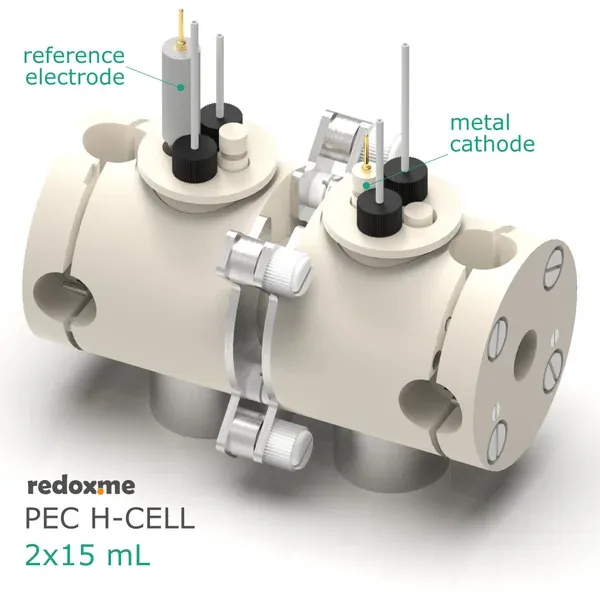
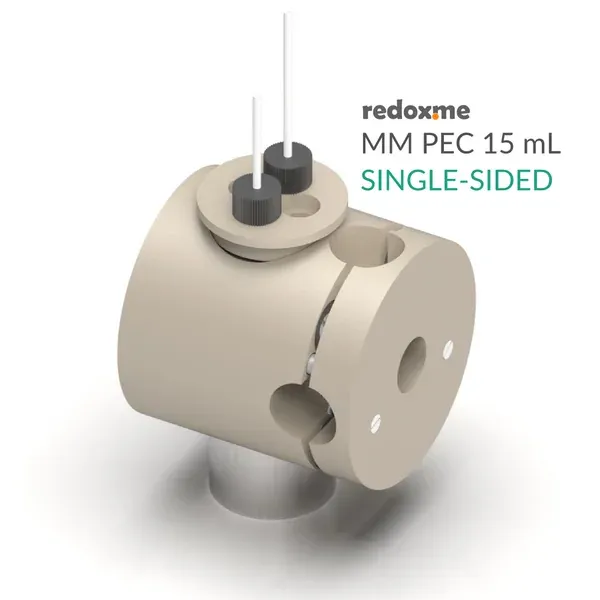
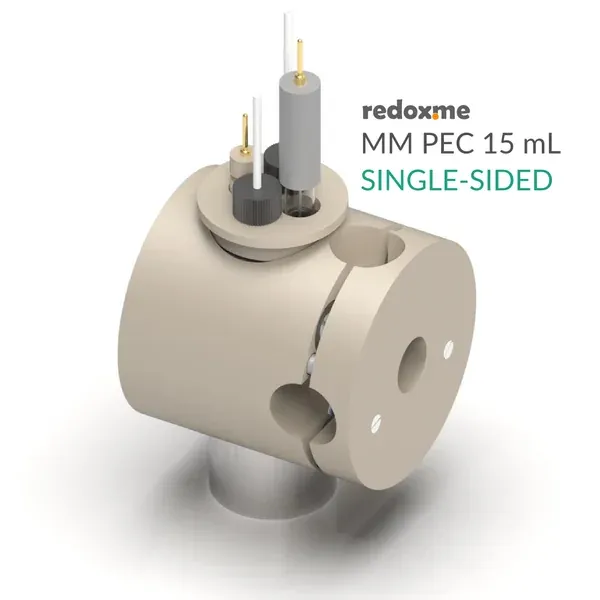
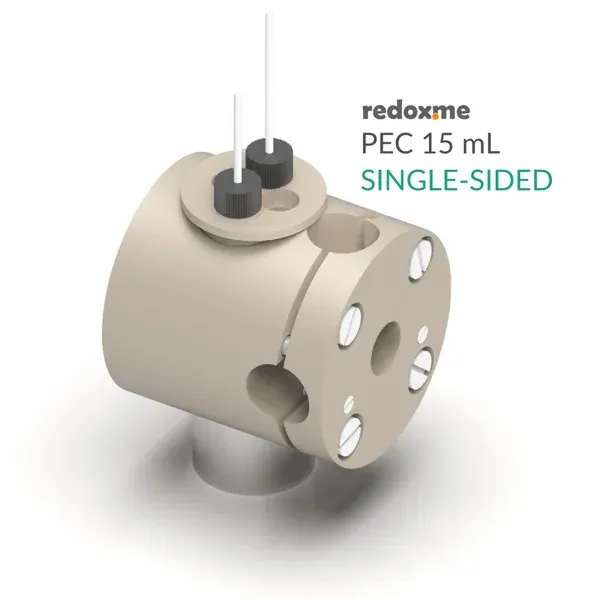
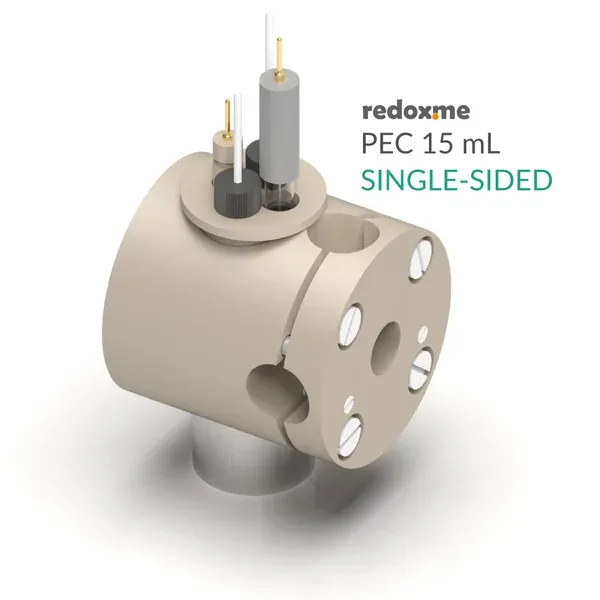
Horizontally mounted, double compartment Photo-Electrochemical Flow H-Cell for simultaneous investigation of thin film photo-anode and photo-cathode. Liquid-tight construction with two separate chambers, each equipped with an electrolyte inlet and outlet. Chambers are separated by an ion-exchange membrane (e.g. DuPont Nafion® membrane).
Application Note
Designed to investigate performance of a thin film photo-anode and/or photo-cathode (e.g. nanocrystalline material or conducting polymer) deposited on a rigid or flexible transparent substrate (typically fused quartz glass). The thin film photo-cathode (counter electrode) deposited on a rigid or flexible substrate is mounted in the second chamber. Alternatively, a metal wire counter electrode may serve as a cathode. One or two classical reference electrodes are mounted in flow chambers. The cell should be connected with two external electrolyte reservoirs to circulate the electrolytes using peristaltic pumps. Gas purging and ice cooling may also be applied.
Typical applications: basic photochemistry, photolytic water splitting, photoinduced charge separation, photocorrosion and CO2 reduction.
Product Includes
Nominal Exposure Area
1 cm²
Flow Chamber Volume
2x1.5 mL
Electrode Plug Diameter (Cell)
6 mm
Recommended Substrate Size
25 mm × 25 mm
Maximum Substrate Thickness
4 mm
Max. Membrane Thickness
4 mm
Cell Body Material
PTFE
O-Ring Material
EPDM/FKM (aqueous) or FFKM (organic)
Number of Compartments
2
Gas Inlet / Outlet
No
Electrolyte Inlet / Outlet
Yes
Membrane-Separated Compartments
Yes
Cell Orientation
Horizontal
Compatible Electrolyte Types
Aqueous and Organic
0 global ratings
Verified Identity
Every review undergoes an email verification process to ensure it originates from a verified industry professional.
Verified Purchase
We manually validate "Verified Purchase" claims by cross-referencing with supplier records or identifying the equipment in peer-reviewed scientific publications.
Transparent Publishing
All verified reviews, whether positive or negative, are published without bias as long as they comply with our community guidelines.
No reviews yet. Be the first to share your thoughts!
Share your experience with this product.
Help the scientific community by sharing research papers that utilize this equipment.
Contact us to add your research.
Price: 224.00 USD

Price on request
Price on request
Price on request
Price on request
Price on request
Price on request
Price on request
Price on request
Price on request